

Why Component-Level PCB Repair Beats Full Board Replacement
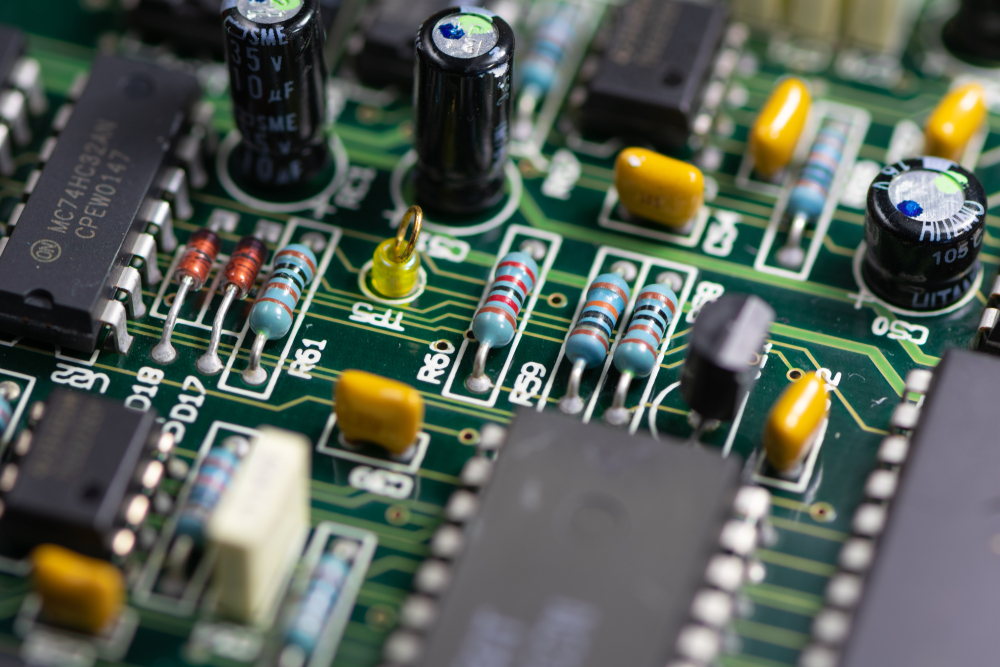
A blown capacitor doesn’t disqualify an entire circuit board. Neither does a fried IC or a scorched trace. When the failure is isolated and the rest of the board tests clean, swapping the failed component costs less, moves faster, and keeps the board’s existing calibration intact.
Full board replacement tends to be the best option when damage has spread across multiple components or layers, or when the OEM board sells for less than the repair itself. Outside those cases, replacing the whole assembly trades a cheap fix for an expensive one.
What component-level repair usually involves
Component-level repair starts with diagnosis, not demolition. A technician traces the failure to its source and replaces only that part.
Most PCB failures trace back to a handful of causes, such as thermal cycling, power surges, moisture, and mechanical stress from vibration. None requires throwing out a board that’s otherwise sound. Isolating the failure comes down to a few standard checks:
- Visual inspection for scorching, bulging, or discoloration around suspect components
- Continuity and resistance checks to narrow the failure to a specific trace or part
- Thermal imaging on boards that fail intermittently under load rather than at power-up
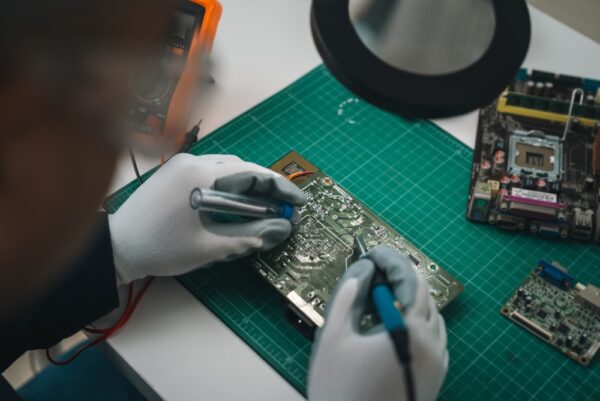
Where full replacement runs into trouble
Board-level replacement skips the diagnosis and swaps the whole assembly, discarding a board that might have one bad part among hundreds of good ones. Generally, full replacement is the practical call on a board still in active production and priced below the repair estimate. Outside that scenario, the same decision creates costs that don’t surface until the search for a new board is already underway.
Lead times stretch for weeks or months on discontinued boards. Replacement cost climbs fast when the original board isn’t in production. Calibration, firmware, and programming reset to factory defaults on a new board. Downtime compounds while a facility waits on sourcing.
Where component-level repair wins
Component-level repair flips each of those problems, since the original board never leaves for a redesign or a hunt through broker inventory. Cost lands well below replacement on boards with isolated component failure. Industry case data puts the cost savings substantially higher than sourcing a new board.
Turnaround runs in days rather than the weeks or months a discontinued board can take to source through an OEM or broker. Calibration, firmware, and configuration carry over untouched, since the original board never left, skipping the setup a blank replacement board would need.
When each approach makes sense
An isolated failure on an otherwise sound board points to repair. Cascading damage across multiple components or layers, or a board still in active OEM production and priced below the repair estimate, points to replacement.
The decision comes down to what’s damaged and what a straight swap would cost against a straight fix, not a blanket rule applied to every failed board that comes off the line. A board sitting in inventory with one bad capacitor is a repair waiting to happen, not scrap waiting for a purchase order.
