

What Is Pneumatic Cylinder Cushioning and Why Does It Matter for Cylinder Life?
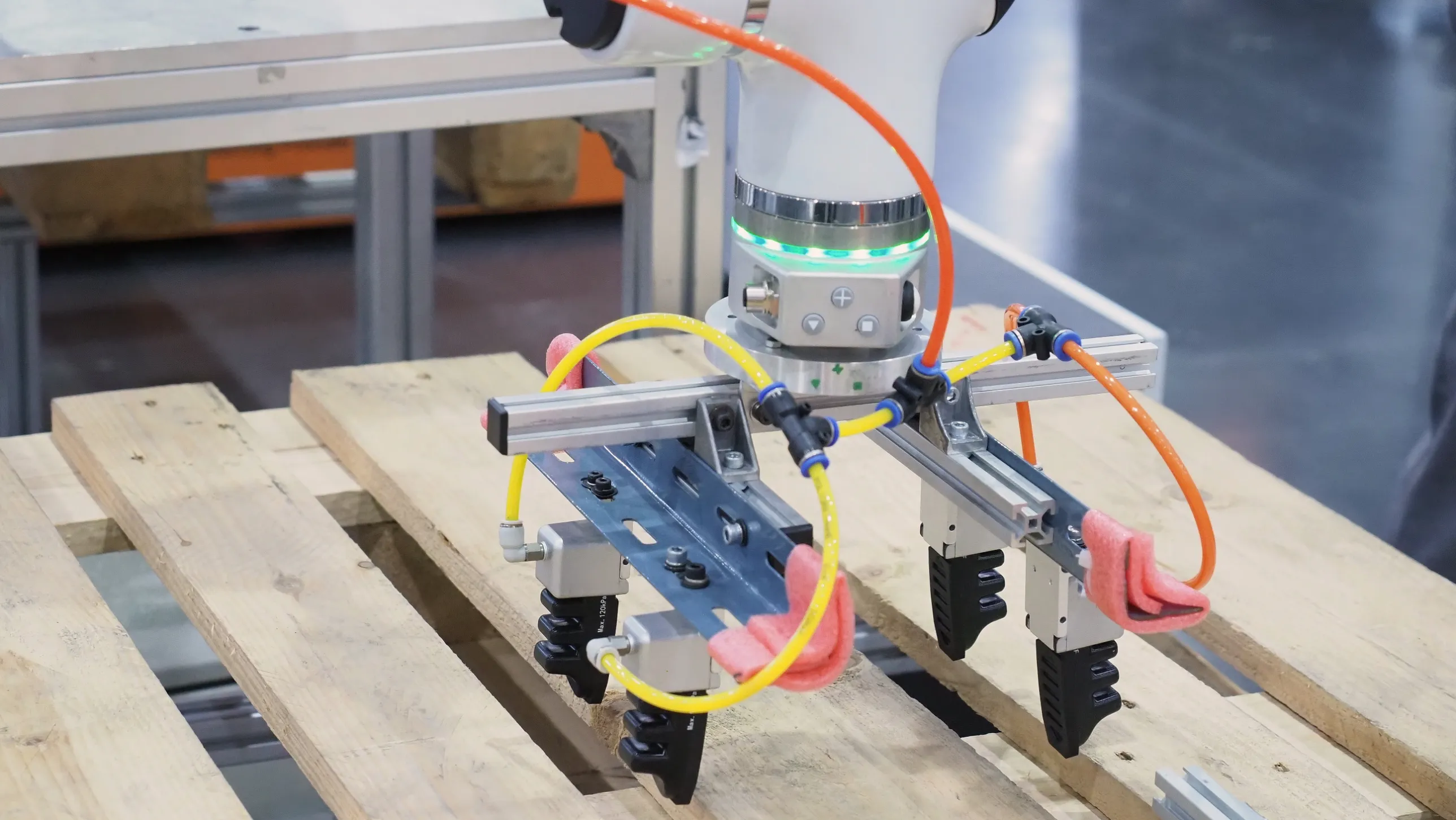
Pneumatic cylinder cushioning slows the piston over the final stretch of its stroke so it doesn’t hit the end cap at full speed. It matters for cylinder life because the energy a moving piston carries has to go somewhere every cycle. A working cushion turns it into compressed air. A missing or misadjusted one sends it into the piston, the end cap, and the machine around them.
How an air cushion works
Near the end of the stroke, a spud on the piston enters a seal in the end cap and closes off the main exhaust path. The air still ahead of the piston has nowhere quick to go, so it compresses into back-pressure that brakes the piston.
That trapped air bleeds out through a small passage, and a needle valve sets how fast it leaves. Turning the needle in firms up the cushion; backing it out lets the piston carry more speed into the end cap.
Five ways to stop a piston
Air cushions are one option among several, and each fits a different range of load and speed:
- Elastomer bumpers absorb a small amount of energy and suit slow speeds, light loads, and short strokes.
- Fixed air cushions meter exhaust through a set orifice and fit applications where load and speed never change.
- Adjustable air cushions use a needle valve and often come standard on heavier-duty cylinders.
- Self-adjusting cushions exhaust through the cushioning piston, so braking changes with load and speed.
- External shock absorbers take over when the energy exceeds what the cylinder’s internal cushion is rated for.
Why speed matters more than load
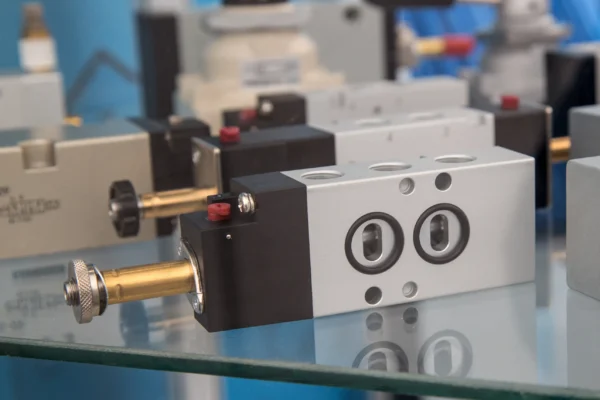
A moving piston’s kinetic energy rises in step with its load, but with the square of its speed. Doubling the load doubles the energy. Doubling the speed quadruples it. Even a 40% speed increase nearly doubles what the cushion has to absorb.
That’s why a cushion set correctly at installation falls behind. A line sped up for throughput sends more energy into the same cushion at the same setting, with no change in what the cylinder carries. Internal cushions carry energy ratings by bore size. Past that rating, no needle setting fixes it, and the job calls for an external shock absorber.
Getting the setting right
A cushion set too open gives a hard stop. The piston meets the end cap with speed left over, metal hits metal, and the contact surfaces wear with every cycle. The vibration doesn’t stay in the cylinder either. It travels into the mounts and the equipment around them. The first sign is usually banging at the end of the stroke.
Set too tight, the cushion brakes the piston too early. The end of every stroke drags, cycle time stretches, and overdamping can make the piston bounce. A cylinder that seems slow to finish its stroke may simply be overcushioned.
Only a narrow range of settings works well. A change in load, pressure, or speed moves that range. Even with nothing changed, cushions may need readjusting after a number of cycles.
Air or metal?
Every stroke ends with energy that must go somewhere. A cushion matched to the current speed and load puts it into compressed air and lets it bleed away. One that’s worn, misadjusted, or outpaced by a faster line puts it into the piston, the end cap, and the cylinder’s seals and rod a little at a time.
A cylinder that bangs at the end of every stroke is wearing itself down one cycle at a time. Global Electronic Services repairs and rebuilds pneumatic cylinders, from worn seals to damaged end caps. Contact us for Repair, Sales & Service of Industrial Electronics, Servo Motors, AC & DC Motors, Hydraulics & Pneumatics — don’t forget to like and follow us on Facebook, LinkedIn, YouTube, and X!
