

Why Vertical Motors Experience Different Failure Modes Than Horizontal Motors
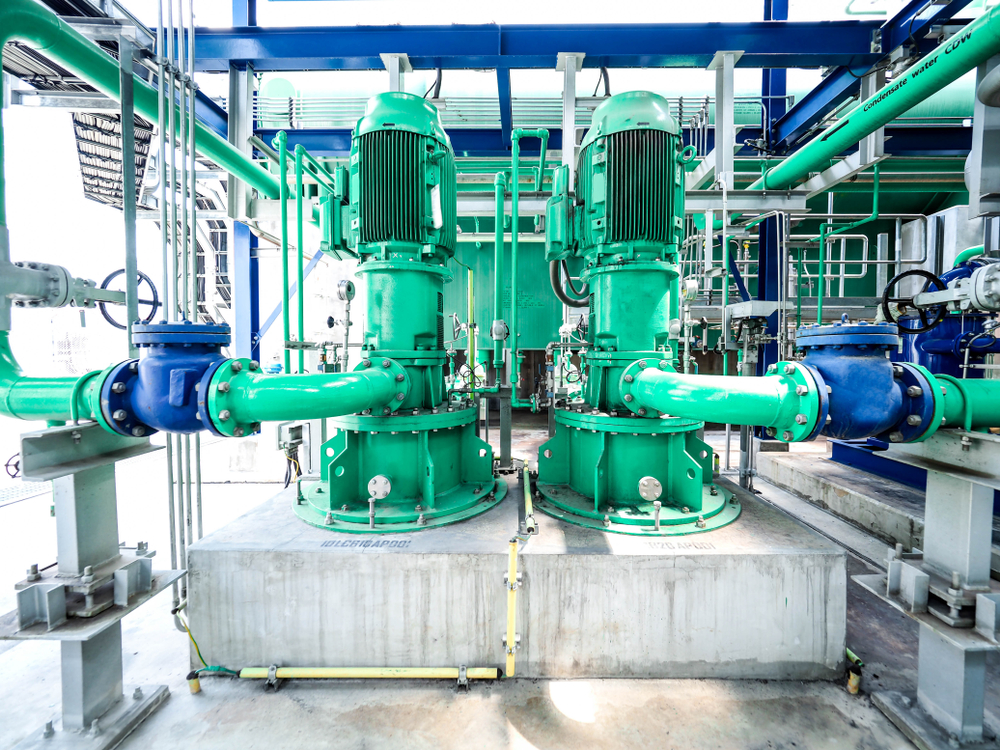
A motor is a motor until it isn’t. Maintenance teams that carry horizontal motor experience into vertical applications often find themselves replacing the same bearing twice, chasing the same winding fault, or puzzling over failure modes that don’t match what the troubleshooting guide predicts. The equipment isn’t defective; the orientation changed the physics.
Vertical motors share the same electrical fundamentals as their horizontal counterparts. Mechanically, however, they’re a different animal.
How bearing loads shift from radial to axial
In a horizontal motor, the rotor weight loads the bearings radially. Flip the motor vertically, and that load transfers to the axial direction — straight down through the shaft. The thrust bearing, typically an angular contact ball bearing seated at the top of the motor, now carries the full weight of the rotor plus whatever downward hydraulic load the connected pump generates.
Horizontal motors treat axial thrust as a secondary consideration. In vertical motors, it’s the primary one, and bearing configurations reflect that:
- Single angular contact bearing: handles normal thrust loads
- Two bearings in tandem: rated for 175 percent of normal thrust
- Three bearings stacked: rated for 250 percent of normal thrust
- Spherical roller or tilting-pad bearings: used when loads reach thousands of pounds
When the thrust load calculation is off — or a horizontal-duty bearing gets substituted into a vertical application — the bearing fails fast, often in ways that look like a lubrication problem on the surface.
How gravity works against the lubricant
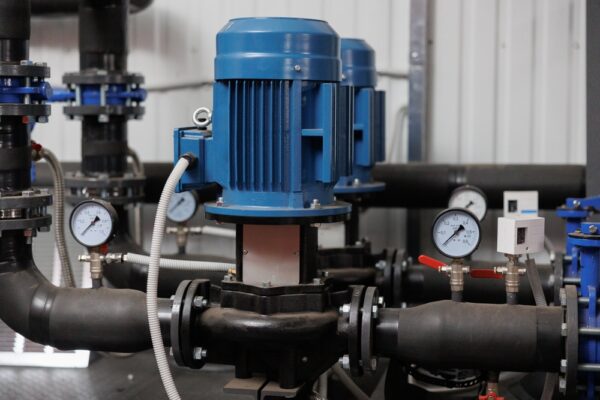
On a horizontal motor, gravity has a relatively neutral effect on grease distribution. On a vertical motor, it pulls grease away from the bearing, accelerating depletion and cutting relubrication intervals roughly in half compared to a similar horizontal application.
Many vertical motors also run mixed lubrication systems — oil for the thrust bearing, grease for the guide bearing. That means two lubricants, two service intervals, and two distinct failure modes when either is neglected. Common failure points include:
- Wrong viscosity oil in the thrust bearing reservoir
- Incompatible grease thickeners mixed during guide bearing service
- Overgreasing the guide bearing, which churns grease and accelerates breakdown
- Missing the initial oil fill (manufacturers ship vertical motors with empty reservoirs)
How moisture and contaminants find new paths
Enclosure designs that perform reliably on a horizontal motor may fall short once the motor is oriented vertically. The core issue is simple: condensation follows gravity, and in a vertical motor, the paths it takes are different. On pump-coupled applications, water can:
- Track down into winding cavities
- Pool in the lower bearing area
- Migrate back up the shaft seal when suction conditions shift
- Carry process chemicals into the motor on aggressive fluid applications
Winding failures from moisture ingress show up more frequently in vertical installations for this reason. Space heaters that might be optional on a dry horizontal motor become a line of defense on vertical equipment that cycles between operating temperature and ambient, especially in humid environments or seasonal applications.
Why orientation isn’t cosmetic
Vertical motors fail along predictable lines once the physics are understood. Axial load changes how bearings are selected and stressed. Gravity changes how the lubricant behaves and how often it needs attention. Enclosure orientation changes where moisture and contamination go when they get inside. A maintenance strategy built around horizontal motor assumptions will miss all three.
