

What Causes Relay Contact Welding — and How To Prevent It
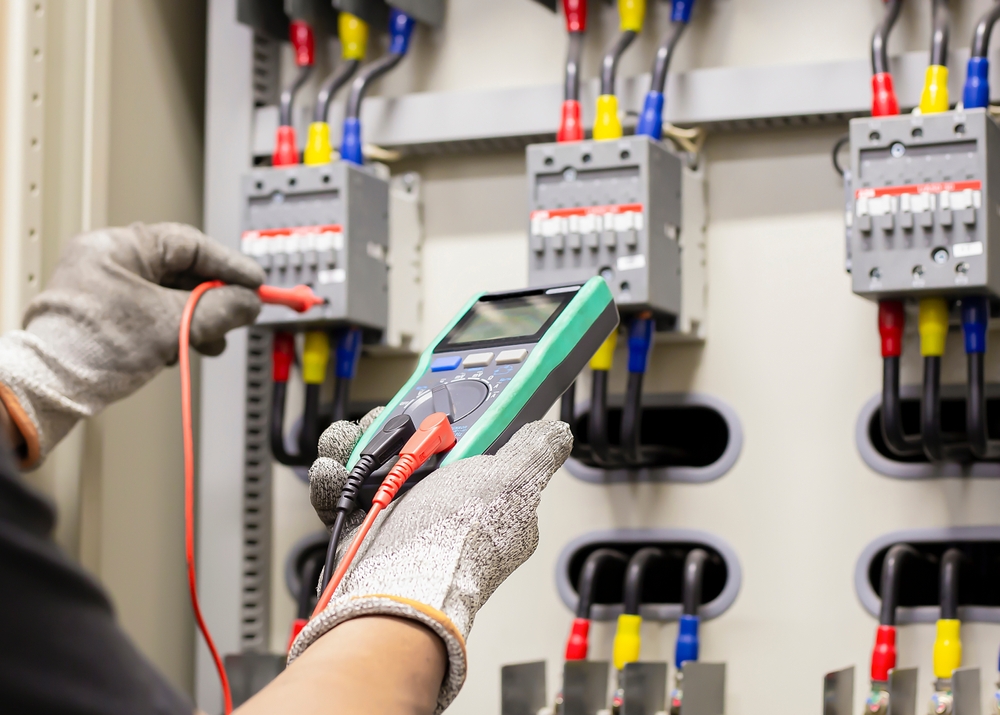
Relay contact welding is one of the most disruptive failure modes in industrial control systems. When the contacts inside a relay fuse together, the circuit they control can no longer open. Motors may run when they shouldn’t, heaters may stay energized, and downstream equipment loses the ability to shut off safely. These failures can escalate quickly, leading to overheating, equipment damage, or unexpected shutdowns.
What is relay contact welding?
Relay contact welding occurs when the metal surfaces of a relay’s contacts become fused together, usually due to excessive heat or electrical arcing. In normal operation, contacts briefly arc as they open or close, but well-designed relays manage this safely.
Problems arise when heat becomes intense enough to soften or melt the contact surfaces. Once fused, the relay is stuck in the closed position, creating a permanent connection even when the control system commands it to open. This turns a simple switching device into a single point of failure for an entire process.
How and why welding occurs
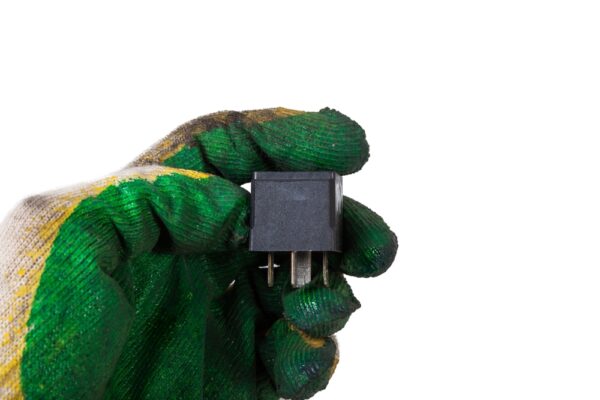
Relay contact welding is almost always the result of predictable electrical and mechanical forces. Every switching event subjects relay contacts to heat, arcing, and mechanical pressure. When any of these are pushed beyond the relay’s limits, the metal can soften, erode, or fuse. Common culprits include:
- High inrush current creates extreme contact stress. Loads like motors, transformers, solenoids, and capacitors pull several times their normal running current during startup. These surges create large, energetic arcs when the relay makes or breaks the circuit. If the contacts are undersized or overloaded, the heat generated during this surge can deform or fuse their surfaces.
- Inductive loads release dangerous voltage spikes. Inductive devices store energy in magnetic fields. When power is removed, that stored energy returns to the circuit as a high-voltage transient. Without suppression — such as diodes on DC coils or snubbers and MOVs on AC loads — these spikes fire across the relay contacts, accelerating erosion and increasing the risk of welding.
- Overloaded or underspecified relays fail sooner. If a relay is selected too close to the application’s current or voltage requirements, the contacts operate at the edge of their thermal capacity. Continuous stress — especially in warm environments — degrades contact surfaces and leaves them more susceptible to fusion during normal switching events.
- Contamination and oxidation increase resistance. Dust, moisture, chemical vapors, and oxidation films raise the resistance at the contact interface. Higher resistance equals higher heat generation whenever current flows. Over time, even minor contamination can tip the balance toward welding.
- High duty cycles reduce cooling time. When a relay cycles rapidly, its contacts don’t have time to cool between actuations. Repeated arcing and heat buildup gradually weaken the metal structure, making the contacts more prone to sticking or fusing under stress.
How to prevent relay contact welding
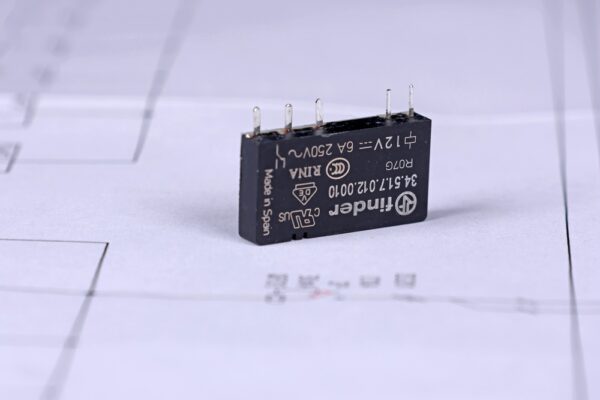
Relay welding isn’t a failure you have to accept. With the right mix of electrical protection, relay selection, and environmental controls, you can dramatically cut down on contact fusion — even in demanding applications. The key is targeting the conditions that cause contacts to arc, overheat, or carry more load than they’re designed for.
- Use suppression (diodes, RC snubbers, MOVs) to eliminate high-voltage transients.
- Limit inrush current using soft starters, NTC thermistors, or staged power-up circuits.
- Right-size relays with adequate derating so contacts operate within limits.
- Use sealed or environmentally protected relays to prevent oxidation and contamination.
- Reduce switching cycles by optimizing control logic, setpoints, or timing intervals.
Relay welding is preventable with the right controls
Relay contact welding isn’t unpredictable. It results from identifiable electrical and environmental stresses. When teams address the electrical stressors behind the problem — high inrush, inductive kickback, contamination, and undersized hardware — they transform relays from weak points into reliable, long-lasting components.
