

Why Starting Methods Matter More Than Most Motor Specs
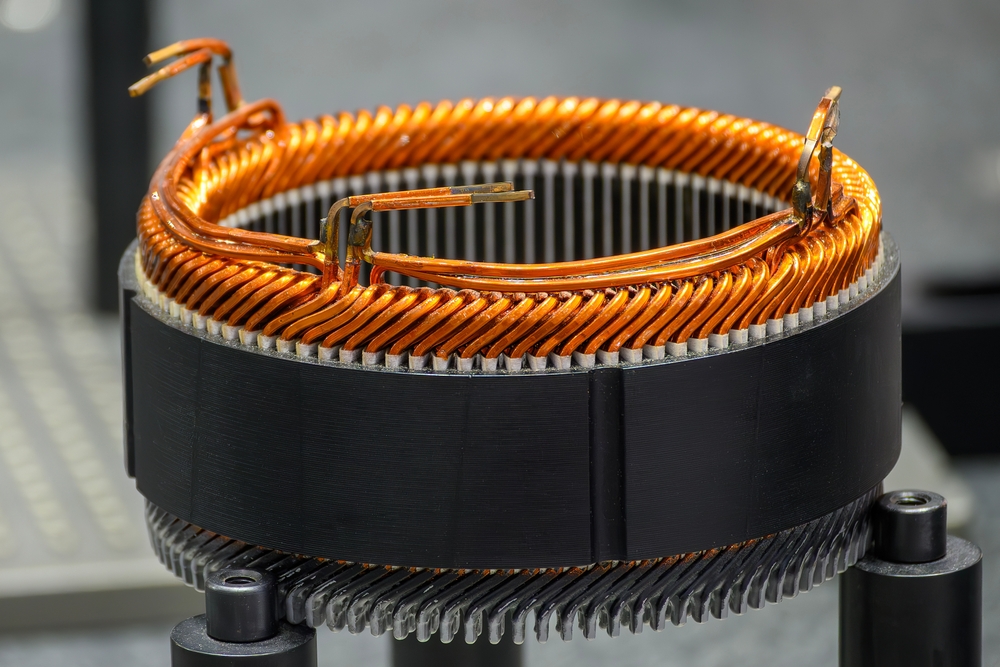
Facilities spend real time evaluating motor efficiency ratings, frame sizes, and insulation class — then put the motor on a direct-on-line starter without a second thought. The starting method determines the electrical and mechanical stress the motor absorbs every time it starts. On equipment that cycles frequently, that decision compounds over thousands of start events. It’s one of the most consequential choices in a motor application, and one of the least examined.
What happens at startup?
The moment an AC induction motor starts, it draws 6–8 times its full load current before reaching running speed. That inrush creates immediate heat in the windings and a torque spike that hits every mechanical component downstream: couplings, gearboxes, belts, and whatever the motor is driving.
The starting method determines how much of that stress reaches the motor and drivetrain, and how quickly. The faster the motor ramps to speed, the shorter the inrush duration, but the more abrupt the mechanical shock. Managing that trade-off is what starting method selection is about.
Four methods (and what each does)
- Direct-on-line (DOL): Direct-on-line starting applies full voltage, full inrush current, and a full torque spike from the first instant. This method is simple and inexpensive, making it appropriate for smaller motors on non-sensitive loads. On motors above 25–30 HP, the resulting current spike can begin affecting other equipment sharing the same circuit or transformer.
- Star-delta: Star-delta starting begins with the motor in a star configuration, reducing starting current to roughly one-third of direct-on-line levels. The reduction in current comes with a similar reduction in torque, which limits its use to unloaded or lightly loaded starts. The transition from star to delta creates a secondary torque spike that is often overlooked during system design.
- Soft starter: A soft starter uses SCRs to gradually ramp voltage and limit inrush current to approximately 200–400% of full-load current. The system bypasses the SCRs after startup, so it does not provide speed control during normal operation. This approach works well in applications that need reduced-voltage starting without variable speed capability. On larger motors, start frequency becomes an important consideration because SCR thermal limits typically restrict practical operation to 6–10 starts per hour.
- VFD: A variable frequency drive controls both frequency and voltage, allowing true soft starting with full torque control throughout acceleration. The drive also provides variable speed operation after startup. Although it is generally the most expensive option, it offers the greatest level of motor control. PWM switching harmonics generated by the drive can add heat to the motor, making thermal management and insulation life important considerations.
How to match the method to the application
The right starting method follows from the application requirements, not default habits or upfront cost alone. The decision comes down to four questions:
- What’s the load condition at startup? High-inertia, low-breakaway-torque loads like centrifugal pumps and fans handle soft starters well. High-breakaway-torque loads like loaded conveyors and positive-displacement compressors need either a properly sized soft starter or a VFD to deliver adequate starting torque without overcurrent.
- How often does the motor start and stop? Equipment cycling dozens of times per shift puts soft starters under thermal stress. VFDs handle frequent cycling without that limitation.
- What’s the available line capacity? Facilities with limited transformer capacity or sensitive equipment on the same circuit need reduced-voltage starting above a certain motor size (DOL becomes disruptive to the whole circuit).
- Does the process need speed control during operation? If yes, a VFD is the only answer. A soft starter manages the start event and nothing else.
Why the nameplate doesn’t tell the whole story
Motor efficiency ratings and insulation class matter, but they describe what the motor is capable of under design conditions. The starting method determines what conditions the motor actually experiences at every start. On equipment that starts and stops frequently, the cumulative effect of start stress is often what ends the motor’s service life ahead of schedule, not the running load it was sized for.
