

Why Motors Run Hot After Bearing Replacement
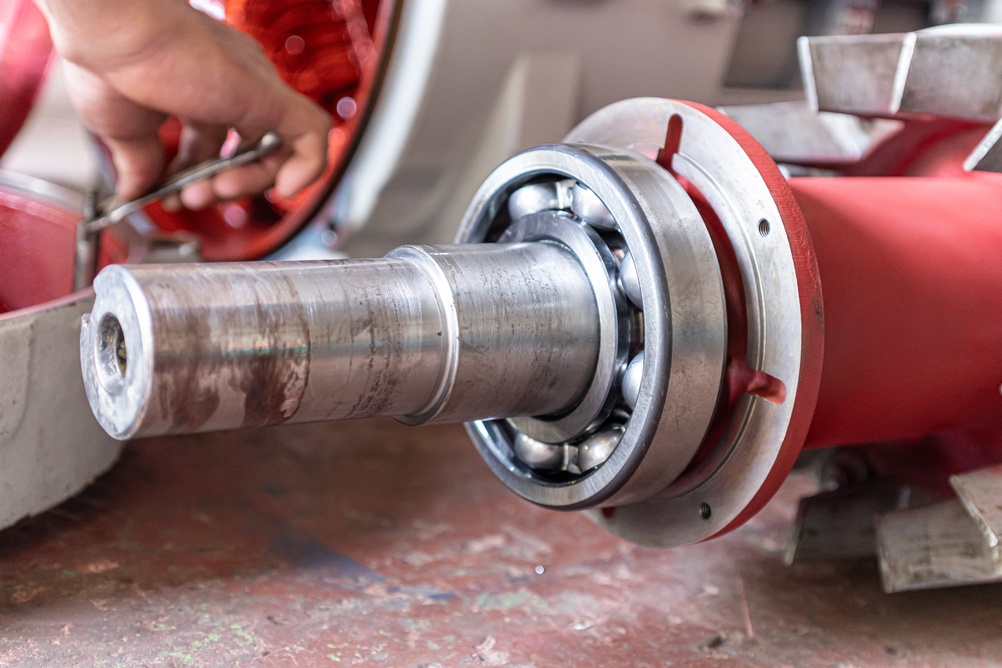
Replacing bearings is one of the most common motor maintenance tasks. It’s also one of the most trusted fixes when motors run hot, noisy, or rough. So when temperatures rise after the replacement, it’s tempting to assume the motor just needs time to “break in.”
In reality, post-repair overheating is rarely normal. Bearings directly influence friction, load distribution, and alignment inside the motor. Even small changes during installation can alter how heat is generated and dissipated.
When a motor runs hotter after bearing replacement, it’s usually responding to a specific condition, not settling in. Common scenarios include:
- Bearings installed with an incorrect fit or preload: Improper fit is one of the most common causes of post-replacement overheating. Bearings pressed too tightly onto the shaft or into the housing increase internal friction. Excess preload forces rolling elements to work harder than designed, generating heat even at normal operating speeds. What makes this issue tricky is that vibration and noise may remain low, giving the impression that everything is fine except for the temperature rise.
- Overlubrication during bearing installation: Adding too much grease is a classic mistake. Excess lubricant has nowhere to go, so it churns inside the bearing cavity. This churning creates fluid friction, raising temperatures quickly after startup. Overlubrication can also push grease into seals, increasing drag and further contributing to heat buildup. More grease does not mean more protection.
- Incorrect or incompatible lubricant: Using the wrong grease viscosity or thickener can increase friction instead of reducing it. Problems also arise when new grease is added on top of residual lubricant that wasn’t fully removed during replacement. Incompatible greases can separate, harden, or lose lubricating properties, causing heat even though lubrication appears adequate.
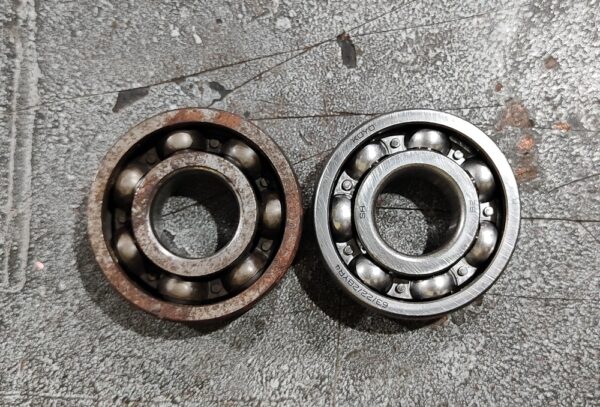
- Shaft or housing surface condition issues: New bearings rely on proper mating surfaces to function correctly. If the shaft or housing has poor surface finish, fretting, wear, or out-of-round conditions, friction increases immediately. Bearing replacement doesn’t correct these issues but often exposes them. The result is higher operating temperatures despite brand-new components.
- Misalignment introduced during reassembly: Disassembly and reassembly can subtly shift alignment. Minor misalignment, soft foot, or base distortion changes how loads are distributed through the bearings. Motors may still sound normal and run smoothly, but the added internal loading shows up as elevated temperature rather than vibration.
- Seal or shield-related drag: Contact seals generate more friction than non-contact shields. If seals are damaged, misaligned, or improperly installed, drag increases. This added resistance turns into heat, especially at higher speeds or under continuous operation.
- Electrical or load conditions exposed by the repair: Sometimes the bearing replacement isn’t the cause but the catalyst. Reduced mechanical noise and friction can expose marginal electrical conditions, voltage imbalance, or load issues that were previously masked. In these cases, the bearing didn’t create the heat. It revealed it.
- Misinterpreting break-in temperature rise: A brief temperature increase after startup can be normal. Sustained overheating is not. If temperatures don’t stabilize within a reasonable period, something is wrong. Labeling ongoing heat as “break-in” often delays corrective action and leads to premature bearing failure.
Motors don’t run hot after bearing replacement without a reason. Elevated temperatures point to installation errors, lubrication issues, surface conditions, alignment changes, or system-level stresses introduced (or uncovered) during the repair. It’s best to look at post-repair heat as diagnostic feedback. It could help you prevent repeat failures, rework, and shortened bearing life.
