

Why Equipment Near Plant Doors and Exterior Walls Fails More Often
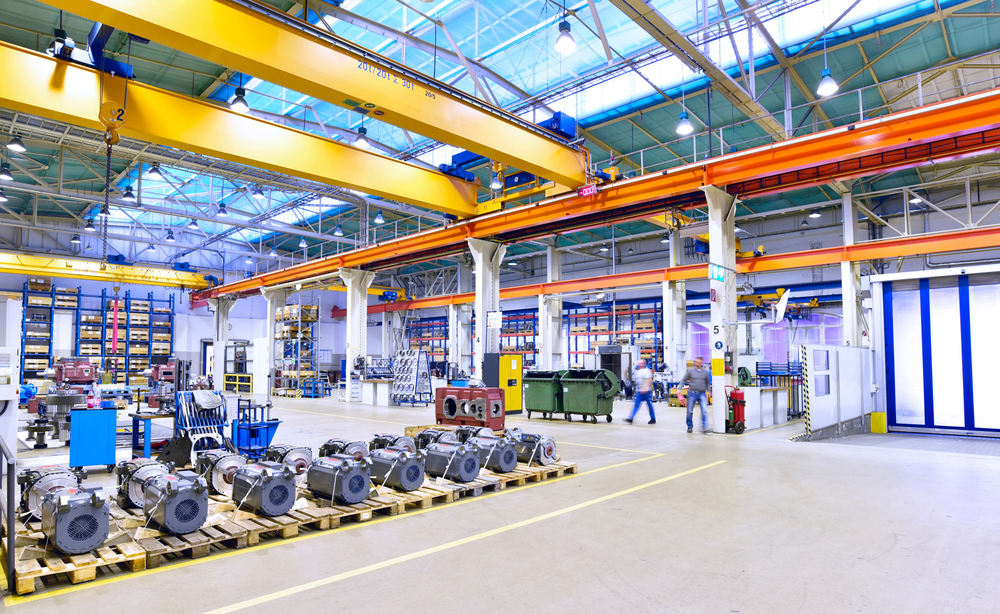
Most maintenance teams track what fails. Few track where it fails. Equipment positioned near loading dock doors, rollup entrances, or exterior walls tends to cycle through repairs faster than identical equipment deeper in the facility — same make, same model, same load. The difference is the environment those machines live in. Proximity to the building envelope puts equipment at the intersection of stressors the rest of the floor never sees.
How thermal cycling wears equipment down from the inside
Every time a loading dock door opens, the ambient temperature at that end of the floor shifts — sometimes dramatically, depending on the season. Equipment near those openings experiences repeated thermal swings that interior equipment doesn’t.
For electronics, this means contraction and expansion of circuit board traces, solder joints, and connector pins. For motors, the bearing lubricant never fully stabilizes — too cold to flow properly on startup, overheated under load, and then chilled again when the door opens. Other components most vulnerable to thermal cycling near plant entrances include:
- Capacitors, which age faster under temperature swings than under steady heat
- Solder joints on circuit boards, which fatigue and crack over repeated expansion cycles
- Connector pins and terminal blocks, which develop resistance as metal fatigues
- Bearing grease, which loses viscosity consistency and accelerates wear

How moisture finds its way in
Exterior walls and doorways are where outdoor air meets conditioned interior space. When warm, humid air enters through an open door and contacts cooler surfaces — enclosure panels, motor housings, circuit boards — condensation forms. This is especially pronounced in summer in humid climates, or in any facility with a significant temperature differential between inside and outside.
Even without visible water, elevated humidity near the building perimeter is enough to corrode electrical contacts, degrade winding insulation, and introduce conductive moisture into enclosures that appear sealed. Equipment most exposed to moisture damage at perimeter locations includes:
- Motors with open drip-proof enclosures not rated for wet environments
- VFDs with open-air cooling vents that draw in humid air
- Control panels without NEMA 4 ratings installed near dock doors
- Printed circuit boards without conformal coating on corrosion-prone contacts
Why contamination concentrates at entry points
Open doors don’t just let in air. They also let in whatever the air is carrying. Dust, debris, exhaust particulate from forklifts, pollen, and outdoor contaminants all concentrate near active entrances. Forklift and vehicle traffic near dock doors keeps settled particles airborne longer than in quieter interior zones. For drives and electronics, contamination works three ways simultaneously:
- Particles clog cooling vents, driving up operating temperatures.
- Conductive particles create stray current paths on circuit boards.
- Dust mixed with moisture forms a corrosive paste that accelerates contact degradation.
Why location should factor into the maintenance plan
None of this means equipment can’t be placed near doors or exterior walls. Operational layouts don’t always allow for ideal positioning. But it’s important to remember that perimeter placement changes the failure math. Equipment in those zones warrants tighter inspection intervals, higher enclosure ratings, and closer attention to lubrication and contamination.
A machine that’s technically identical to one in the facility interior isn’t operating under the same conditions. The maintenance program shouldn’t treat it as though it does.
