

Why Brushless Doesn’t Mean Maintenance-Free
Eliminating brushes removes the most frequent maintenance intervention in a brushed motor: carbon inspection, replacement, and commutator service. That reduction is real, but “no brushes” gets shortened to “no maintenance” in product literature and on plant floors, and that’s where motors are neglected into failure.
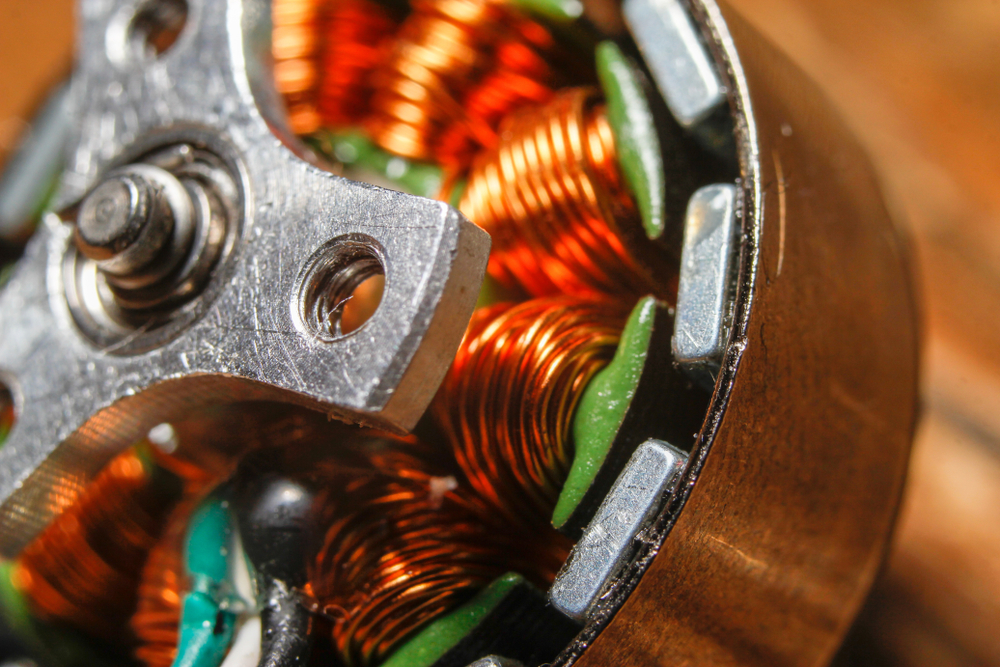
Brushless motors still have bearings, feedback devices, windings, cooling systems, and mounting hardware. Every one of those degrades in service regardless of how the motor commutates.
What brushless eliminates
The maintenance burden that brushless motors remove is significant enough to justify the “low maintenance” label:
- Carbon brush wear and replacement — typically 500–2,000 hours on brushed motors
- Commutator inspection, cleaning, and periodic resurfacing
- Arcing, carbon dust contamination, and the brush holder assemblies that generated it
Removing those items extends service intervals substantially. The problem comes from treating that extension as an elimination.
Bearings: The maintenance item that didn’t go anywhere
Bearings are the primary remaining wear item in a brushless motor, failing on a schedule that depends on operating hours, speed, load, and environment. Several conditions accelerate that schedule:
- Grease degraded by heat cycling loses viscosity and film strength. Hardened grease at high speeds is as damaging as insufficient lubrication.
- Contamination ingress through compromised seals introduces abrasive particles into the bearing cavity.
- False brinelling from vibration during storage or transit creates fretting corrosion at contact points before the motor ever runs.
- Sustained operation at reduced speeds starves some bearing designs of the lubrication flow they were designed around.
Bearing noise is the earliest detectable indicator: a tone change, clicking, or grinding on a motor that previously ran quietly. By the time vibration is measurable or temperatures are elevated, the damage is already progressing. Inspection intervals should be based on operating hours and environment, not on the assumption that brushless bearings are self-managing.
Feedback devices: The new maintenance category
Encoders, resolvers, and Hall effect sensors provide the rotor position data the drive needs to commutate electronically. Degraded feedback produces positioning errors, hunting, and drive faults before it produces an obvious hardware failure.
Encoder connections loosen from vibration, corrode in humid environments, and admit contamination through improperly seated connectors. The resulting faults get blamed on the drive or the machine before the feedback device gets inspected. Feedback device condition belongs on the inspection checklist alongside bearings.
Thermal management and contamination
Contamination on motor housings, including oil mist, dust, and process debris, acts as insulation and raises winding temperatures even when the motor is otherwise healthy. Winding insulation in brushless motors is subject to the same IEEE class limits and megohmmeter testing intervals as any other motor type.
Mounting hardware loosening from vibration produces misalignment that compounds bearing wear and introduces feedback instability, which is a failure pattern that starts at the feet and ends at the encoder.
What maintenance-free actually means
Bearings wear. Encoders degrade. Windings absorb moisture. Cooling paths clog. Brushless motors do all of these things on a longer schedule than brushed motors, which is a real advantage. Treating this longer schedule as no schedule is where the service life gets cut short, and it usually occurs on a motor that had years left if it had been inspected on time.
