

Intermittent Motor Stalling: When Overload Protection Isn’t the Problem
Motor stalling is usually associated with overloads, seized equipment, or excessive mechanical load. But in many facilities, motors stall briefly and recover on their own — sometimes minutes or hours apart — without ever tripping overload protection. These events are frustrating because they leave no obvious fault codes and no clear evidence of failure.
That’s because overload devices are designed to respond to sustained overcurrent, not a momentary loss of torque or short-lived instability. When a motor stalls intermittently, the cause is often something that prevents torque from being delivered in the first place rather than a true overload condition.
Electrical and power-related conditions that cause stalling
Many intermittent stalls originate on the electrical side, even when incoming power appears “normal” at a glance. Issues like brief voltage drops, phase imbalance, or power quality disturbances can reduce torque just enough to stall the motor without triggering protection. Common electrical contributors include:
- Momentary undervoltage during startup or load changes
- Phase imbalance that limits torque on one leg
- Short-duration voltage dips or disturbances
- Harmonics or noise that interfere with motor performance
Because these events are brief, the motor may stall and then restart once conditions stabilize, making the issue difficult to reproduce during troubleshooting.
Control and drive issues that limit torque
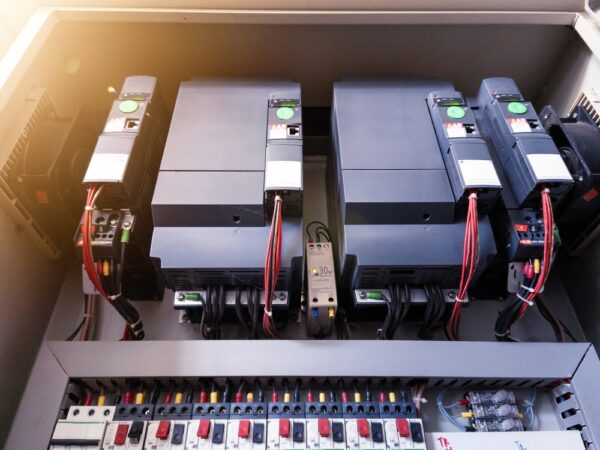
In automated systems, the motor may not be receiving a clean, consistent command to run, or it may be limited by control logic. This is especially common in systems using variable frequency drives (VFDs), where torque delivery depends heavily on configuration. Typical control-related causes include:
- Intermittent control signal loss from loose wiring or failing relays
- PLC logic conflicts or conditional interlocks
- Acceleration ramps that are too aggressive
- Current or torque limits set too low in the drive
- Incorrect motor data entered into the VFD
In these cases, the motor stalls not because it’s overloaded, but because the control system never allows it to develop sufficient torque.
Mechanical resistance that comes and goes
Not all mechanical problems are constant. Some create resistance only under specific conditions — heat, alignment changes, or debris movement. When resistance spikes briefly, the motor stalls and then runs normally once conditions ease. Intermittent mechanical contributors often include:
- Bearings that tighten as temperatures rise
- Misalignment that worsens under load
- Debris or product buildup in driven equipment
- Components that bind only at certain positions
Because the load spike is short-lived, overload protection often remains inactive.
Why these problems are difficult to identify
Intermittent stalling sits in the gray area between electrical, mechanical, and control systems. Each event may look different, happen quickly, and leave no lasting evidence. As a result, teams may replace overloads, adjust settings, or swap components without ever addressing the real cause.
The most effective troubleshooting approach is to treat intermittent stalling as a system-level issue, looking at power quality, control behavior, drive configuration, and mechanical condition together rather than in isolation.

Intermittent stalling is a torque delivery problem
When motors stall without tripping overload protection, the issue is rarely the overload. Instead, something is preventing the motor from producing torque when it’s needed — whether that’s unstable power, control limitations, or temporary mechanical resistance. By focusing on how torque is delivered (or interrupted), teams can move past trial-and-error fixes and resolve intermittent stalling at the source.
