

Hydraulic Pump vs. Hydraulic Motor: Understanding the Difference
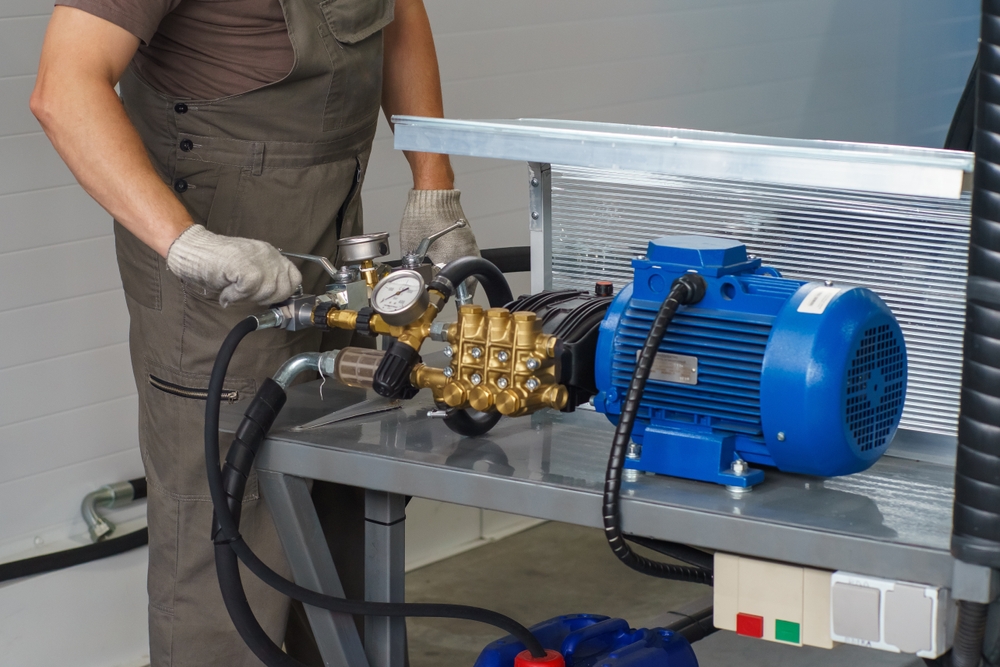
A hydraulic pump converts mechanical energy into hydraulic flow and pressure. A hydraulic motor takes that pressurized flow and converts it back into mechanical rotation and torque. The two often share the same internal design, gear, vane, or piston, but they aren’t built to swap places.
Confusing the two on a repair or a spec sheet leads to a seal that fails or a case that pressurizes past what it was built to handle. That mix-up shows up more often than it should when a rebuild pulls a catalog part based on shared specs alone.
What each is built to do
A pump sits on the input side of a hydraulic circuit. An electric motor, engine, or other prime mover turns its shaft, and the pump pushes fluid out under pressure to power everything downstream. A hydraulic motor sits on the output side. Pressurized fluid from the pump drives its shaft, and that shaft turns whatever the machine needs moving: a wheel on a mobile machine, a winch drum, an auger, or a conveyor drive.
The pump creates the flow. The motor spends it. Both convert energy between the same two forms, mechanical and hydraulic, just in opposite directions. A closed-loop hydrostatic transmission puts both in the same circuit at once, a pump on the input end and a motor on the output end, which makes the difference easy to see in practice.
Why they aren’t interchangeable
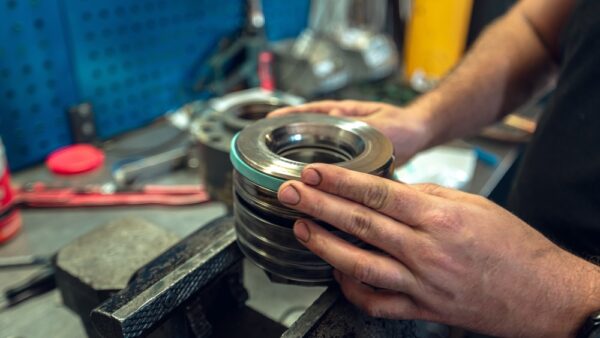
Pumps and motors often share the same gear, vane, or piston construction, which is what makes the mix-up so common. The differences show up in the details engineered around that shared core. Those details matter more than the family resemblance.
- Shaft seals: A motor’s seal has to hold against case pressure and occasional reverse flow. A pump’s seal usually isn’t rated for either.
- Case leakage: Motors typically carry a dedicated drain port to bleed off internal case pressure, while pumps route that same leakage straight back to the inlet.
- Rotation: Many motors are built symmetrically to run in either direction. Most pumps are fixed to spin one way only.
- Efficiency target: Pumps are tuned for volumetric efficiency at speed, while motors are tuned for torque at low speed.
What happens if you mix them up?
A handful of manufacturers build units rated to run as either a pump or a motor, but those are purpose-built exceptions, not evidence that any pump and motor pair will work the same way. Swap one in for the other outside that exception, and the mismatch usually shows up as a leak, a seal failure, or a case that pressurizes past what it was designed to handle.
The resemblance ends at the shaft
A pump belongs wherever something else does the turning to create flow. A motor belongs wherever that flow needs to turn something else. Shared construction between a pump and a motor is a starting point for a rebuild, not a guarantee that one will drop in for the other. Matching the part, seals, ports, and rotation included is what keeps the swap from becoming a second failure.
