

Hydraulic Accumulator Failures: What Causes Loss of Precharge?
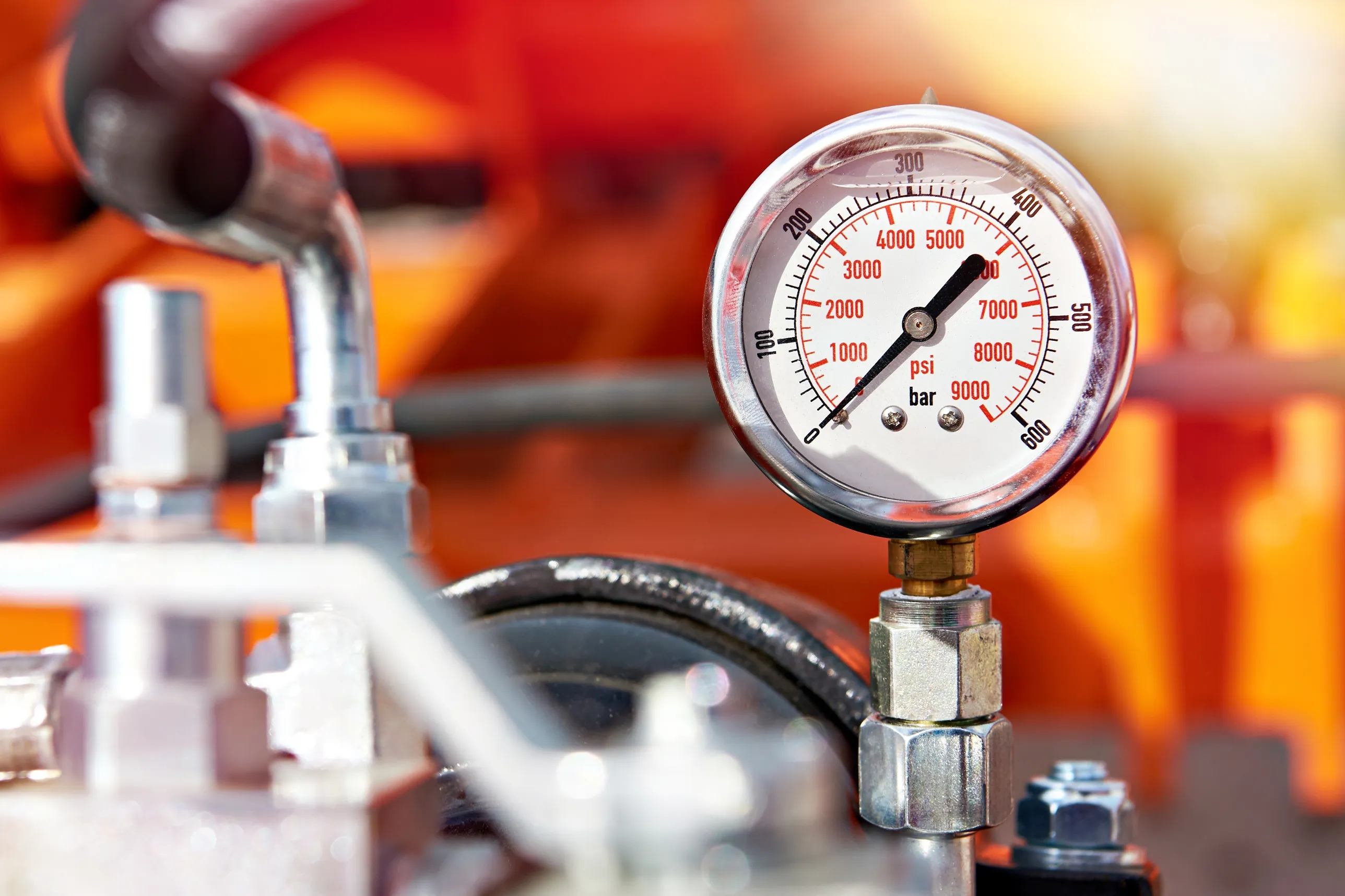
Precharge is the nitrogen packed into a hydraulic accumulator’s gas side before any oil goes in, and it sets how much fluid the accumulator can store and return. Parker puts it at about 90% of minimum system pressure on bladder units and 95% on piston units used for energy storage. When the charge drops, the accumulator delivers less usable fluid, and the system pressure gets harder to hold steady. Six different things can cause that drop.
1. Nitrogen permeating the bladder or diaphragm
Rubber isn’t a perfect gas barrier. Nitrogen slowly permeates through a bladder or diaphragm, and it’s the main cause of precharge loss in those designs. The rate climbs with temperature, so a hot-running system loses charge faster. This loss is normal, which is why precharge gets checked a week after commissioning, again at three months, and then every three to six months depending on what the readings show.
2. A leaking gas valve
Hydroll, an accumulator manufacturer, calls a gas valve core that won’t seat the most frequent offender, whether from wear, contamination, or corrosion. Soapy water on the valve shows it fast, since bubbles mean a leak. Fittings on the gas side can leak the same way. In harsh or outdoor installations, corrosion pitting on the shell or end cap opens a path of its own.
3. Worn piston seals
Piston accumulators separate gas from oil with seals instead of rubber. As those seals wear, nitrogen bypasses them into the oil side, and foamy or aerated fluid can be the first sign. Contaminated fluid speeds that wear along. Worn seals can also fail in the other direction. Oil carried past the piston slowly fills the gas side, and the precharge reading climbs instead of falling until it reaches maximum system pressure and the accumulator stops working.
4. A ruptured bladder
A bladder rupture skips the trend line. Precharge falls to zero immediately, and no measurable gas or fluid leakage comes before it. The first three causes drift over weeks or months. An accumulator can work normally on one cycle and hold nothing on the next, which makes the real question what tore the bladder.
5. A precharge set wrong in the first place
Parker calls excessive precharge the most common cause of bladder failure. Too much nitrogen drives the bladder into the poppet assembly at the oil port, where it gets pinched and cut, often in a telltale C shape. Too little lets the bladder get crushed into the top of the shell, where it can extrude into the gas stem and puncture. Parker says one such cycle is enough to destroy a bladder. Piston units forgive more, though a piston with no precharge strikes the gas end cap again and again. Charging calls for nitrogen only, since compressed air carries moisture and pressurized oxygen near hydraulic fluid is a serious hazard.
6. Temperature, which isn’t a loss
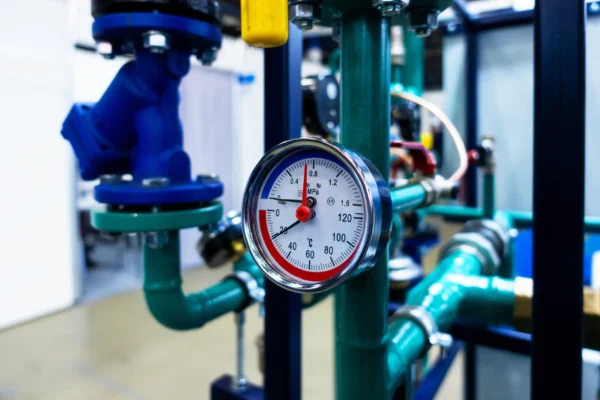
Gas pressure rises and falls with temperature, so the same charge reads lower cold than hot. Hydroll cites a 30- to 40-degree C swing as enough to shift the reading. The practice is to check precharge cold and at rest, record the temperature with each reading, correct to the reference temperature, and top up only when the corrected value falls more than 10% below spec.
Log the number
A single precharge reading says little. A log of readings, each with its temperature, shows which of these is happening: a slow and steady slide from permeation, a faster drop from a valve or seal, a climb from oil on the gas side, or a flat line that suddenly hits zero. Each one calls for a different fix, and only the log tells them apart.
A drifting precharge often shows up alongside unstable pressure and aerated fluid elsewhere in the system. Global Electronic Services diagnoses and repairs the hydraulic pumps, valves, and motors that take the strain when an accumulator stops doing its job. Contact us for Repair, Sales & Service of Industrial Electronics, Servo Motors, AC & DC Motors, Hydraulics & Pneumatics — don’t forget to like and follow us on Facebook, LinkedIn, YouTube, and X!
