

How To Fix Hydraulic Shear Machines With Uneven Cutting Pressure
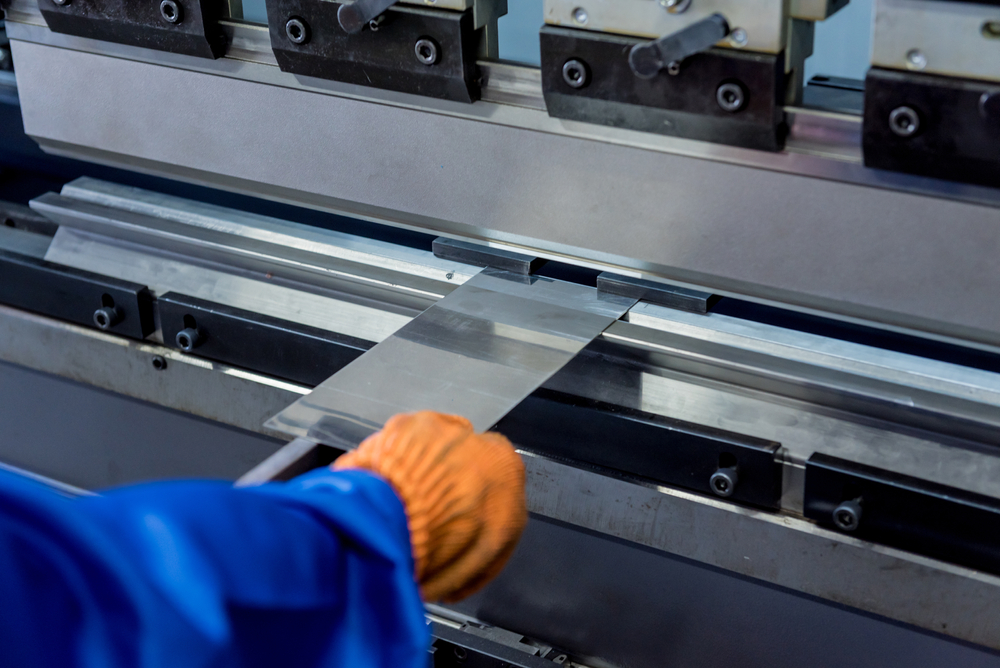
When a hydraulic shear starts producing uneven cuts, blades are usually the first thing maintenance pulls. Sometimes that’s the right call, but sometimes it isn’t. Uneven cutting pressure on a hydraulic shear can originate at the blade gap, the hold-down system, or deep in the hydraulic circuit, and fixing the wrong layer wastes time while the actual problem keeps running. Working through the following three areas in order gets to the root cause without unnecessary teardown.
1. Start with the blade gap and alignment
Blade clearance — the gap between the upper and lower blades — should be set to approximately 5–10% of material thickness. If it’s too wide, the metal tears rather than shears cleanly, leaving a tapered or burred edge on one side. If it’s too narrow, cutting load spikes unevenly across the stroke, causing beam deflection and accelerated blade chipping.
Check gap uniformity across the full blade length using a feeler gauge, not just at the ends. Wear patterns that show tighter clearance on one side than the other are a reliable indicator that the blade or beam has shifted. While the blade is out, inspect fastener torque. Loose blade fasteners allow movement mid-stroke that shows up as inconsistent cut quality even when the gap setting looks correct.
2. Check the hold-down system
Cuts that slant, wave, or vary in length from one end to the other often trace back to the hold-down system, not the blades or the hydraulic circuit. Insufficient or uneven clamping pressure enables the sheet to shift microscopically as the blade descends — a condition called material creep.
The chalk test is a practical field method for confirming this: Apply chalk across the clamping area, engage the hold-down without initiating the cut, release, and examine the impression. Trailing marks along the cut direction indicate the hold-down is engaging after the blade has already begun to move.
This timing problem points to either an incorrect PLC parameter or a slow hydraulic valve response on the clamping circuit — both of which are addressable without touching the main cutting system.
Make sure to verify hold-down cylinder pressure against the manufacturer’s spec while the system is under load, not just at rest.
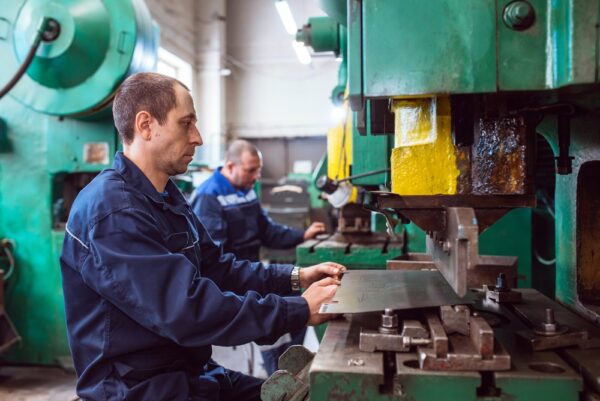
3. Address hydraulic pressure issues
If blade geometry and clamping are confirmed good and cutting pressure still varies between strokes, the hydraulic circuit is the next stop. Three components account for most pressure-related inconsistency.
- The main relief valve: A fatigued spring allows system pressure to vary between cycles, which shows up as cuts that are clean on some strokes and ragged on others. Check pressure at the test port upstream of the directional valve and watch for fluctuation greater than roughly 5 bar during the cutting stroke.
- The pump: Internal wear reduces flow volume. A pump that can’t build adequate pressure under load will produce progressively weaker cuts as the machine heats up.
- Fluid condition: Milky fluid indicates water contamination. Foamy fluid points to aeration. Dark or varnished fluid signals thermal breakdown.
Any of these degrades valve response and accelerates seal wear throughout the circuit. Fluid and filter service resolves contamination issues, but a pump or relief valve showing those pressure signatures needs repair or replacement, not just fluid maintenance.
Work the system, not the symptom
Uneven cutting pressure on a hydraulic shear is a system problem that presents as a cut quality problem. Blade geometry, material clamping, and hydraulic pressure consistency each play a distinct role, and each has its own diagnostic signature. Working through them in sequence keeps the repair targeted and avoids replacing components that were never the issue.
