

How to Design a Maintenance Plan Around Servo Duty Cycles

Generic maintenance schedules treat all servo motors the same — replace bearings every 8,000 hours, check encoders annually, service brakes quarterly, etc. But a servo running continuous loads at steady speeds wears differently than one handling rapid positioning cycles with frequent stops and starts. Better maintenance planning starts with understanding actual duty cycles, not manufacturer assumptions. Here’s how to approach servo maintenance more intelligently.
Step 1: Document your servo duty cycle patterns
Start by recording what your servos actually do versus what they’re rated for. Most servo motors are rated for continuous duty, but many applications involve intermittent operation with varying loads. Track these operating patterns using built-in servo diagnostics or external data loggers:
- Operating hours, load percentages, and thermal patterns
- Acceleration and deceleration frequency
- Peak torque demands and occurrence frequency
- Temperature cycling and ambient conditions
This data can tell you a lot. For example, a servo occasionally hitting 150% rated torque wears differently than one consistently running at 80% capacity. Conversely, servos that heat up and cool down repeatedly stress windings and seals more than those maintaining steady temperatures.
Step 2: Calculate equivalent operating hours
Convert your actual duty cycles into manufacturer-equivalent operating hours using derating factors. A servo running at 120% rated load for 4 hours might equal 6-8 equivalent hours of rated operation. Remember: Frequent starts and stops add wear equivalent to additional operating time.
Apply environmental derating factors for temperature, humidity, and contamination, too. A servo in a 100°F environment with dust exposure ages faster than one in controlled conditions. Manufacturer data sheets provide derating curves, but real-world testing often reveals additional factors.
Finally, create standardized calculations that account for your specific operating patterns. A positioning servo making 1,000 moves per day with 2-second acceleration ramps needs different calculations than a continuous-duty feed servo with variable loads.
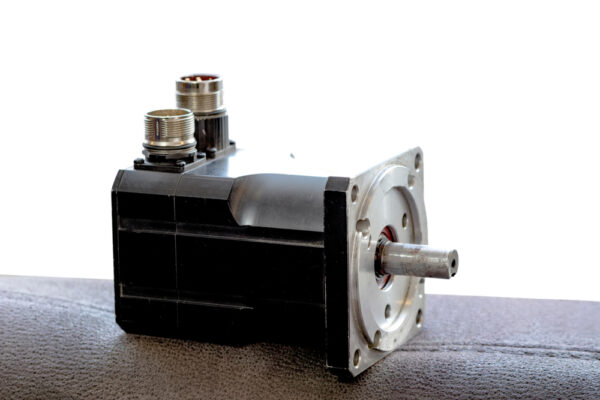
Step 3: Identify wear-prone components by duty cycle
Next, consider individual components. Different duty cycles stress different components. Understanding these relationships helps prioritize maintenance efforts:
- Bearings: High-frequency positioning creates constant acceleration forces that exceed steady-state ratings.
- Encoders: Vibration and thermal cycling loosen connections and damage reading components.
- Brakes: Frequent engagement wears friction materials and causes thermal cycling damage.
- Motor windings: Temperature cycling degrades insulation faster than steady-state operation.
Keep in mind, emergency stops and positioning brakes wear differently than continuous-duty applications. Moreover, connection points throughout the servo loosen from thermal expansion differences between materials.
Step 4: Establish maintenance intervals based on calculated wear
Once you’ve thoroughly assessed component-level stressors, create specific maintenance schedules that match actual wear patterns:
- Bearings: Lubricate based on equivalent hours and load factors (2,000 hours high duty vs. 8,000 standard).
- Encoders: Calibrate quarterly for high-stress environments instead of annually.
- Brakes: Schedule maintenance by engagement cycles, not operating hours.
- Motors: Inspect windings based on thermal cycling severity.
Use grease analysis and positioning accuracy checks to verify interval accuracy. Don’t just follow the schedule blindly, either! Replace components before performance degrades beyond acceptable limits.
Step 5: Monitor and adjust your maintenance plan
It’s critical to track actual component life against predictions and adjust intervals based on real performance. This requires a level of routine inspection between service dates, and you can use techniques like vibration analysis and thermal imaging to shed light on problems before they cause shutdowns. If you discover issues, document failure modes and root causes so you can address them accordingly.
Precision maintenance pays off
Duty cycle-based maintenance plans match reality instead of assumptions. Components last longer when maintained according to actual wear patterns — and unexpected failures drop dramatically. While it takes upfront effort to document and calculate duty cycles, that work pays dividends in reduced downtime and lower component replacement costs.
