

How Static Discharge Damages Sensitive Industrial Electronics on the Bench
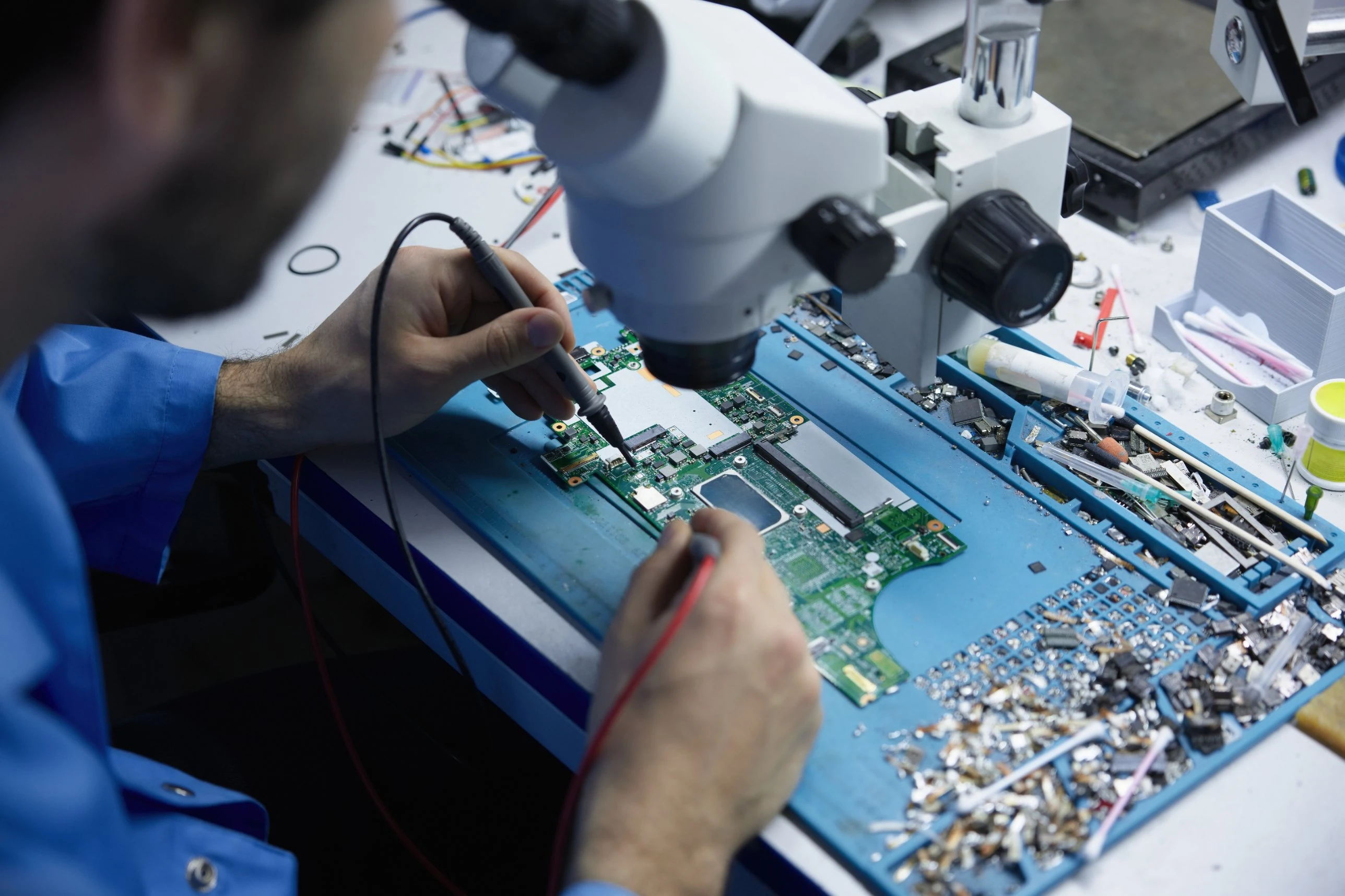
Static discharge damages electronics by forcing current through structures inside a component that are too small to carry it. Most discharges that do this are far too small to feel. On a plant maintenance bench, a board pulled from a drive or PLC can be damaged during a component-level repair, with no spark and no mark to show for it.
What the discharge does inside the part
The ESD Association names three kinds of damage: melted metal, junction breakdown, and oxide failure. When the hit is large enough, the part stops working, and the next functional test catches it. That’s the cheap outcome.
The expensive one is a latent defect, where the part is degraded but still works. The board passes its bench test, goes back into the machine, and fails after a period of normal operation. Latent defects are extremely difficult to detect with current test methods, so nothing ties the later failure back to the bench.
Why nobody notices
A person feels a static discharge at roughly 3,000 volts or more. Many components fail at less than 100. Everything in between does damage silently.
Bench work generates plenty of charge in that gap. The ESD Association figures put a worker at a bench at 6,000 volts when relative humidity sits between 10% and 25% and at 100 volts when it’s between 65% and 90%. Dry winter air sits at the wrong end of that range.
Where it happens on the bench
A charge builds whenever two materials touch and separate. A repair is full of those moments, such as:
- A charged technician touches a board edge or a connector pin, and the charge leaves through the components behind it.
- A board picks up its own charge sliding out of a bag or across the bench, then discharges into the first grounded tool or surface it meets.
- A poly bag picked up from the bench carries as much as 20,000 volts in dry air, and the field around it induces a charge on a nearby board.
- A repaired board leaves the bench in packaging that doesn’t shield it, and the trip back to the machine exposes it all over again.
What a controlled bench has in place
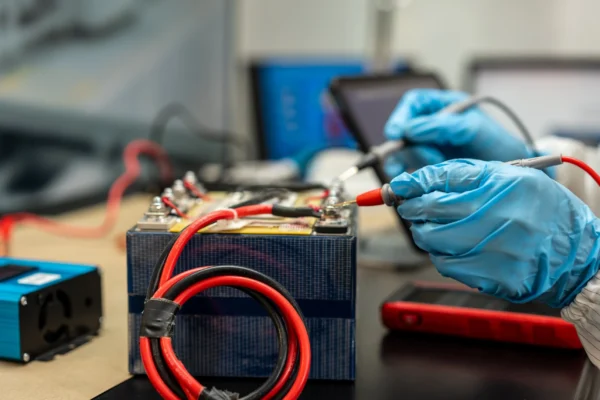
Control comes down to keeping everything at the same potential. A wrist strap with a 1-megohm resistor grounds the technician and requires a daily test or continuous monitor to prove it still works. A dissipative mat does the same for the board but only when it’s tied to the same ground point. A mat that isn’t connected protects nothing.
Plastics can’t be grounded, so the ones that must stay near the work call for an ionizer. Inside that protected area, a low-charging bag is enough. Past it, the packaging also must shield against a discharge.
Damage that leaves no mark
A board handled on an uncontrolled bench can test good and still carry its next failure back into the machine. The repair looks right, the test passes, and the failure that follows reads as a new problem. Grounding the technician, board, and surface between them is what keeps a repaired board from coming back.
A board that fails again soon after a repair deserves a closer look than another swap. Global Electronic Services diagnoses and repairs industrial electronics at the component level. Contact us for Repair, Sales & Service of Industrial Electronics, Servo Motors, AC & DC Motors, Hydraulics & Pneumatics — don’t forget to like and follow us on Facebook, LinkedIn, YouTube, and X!
