
DIY vs. Professional Industrial Equipment Repair
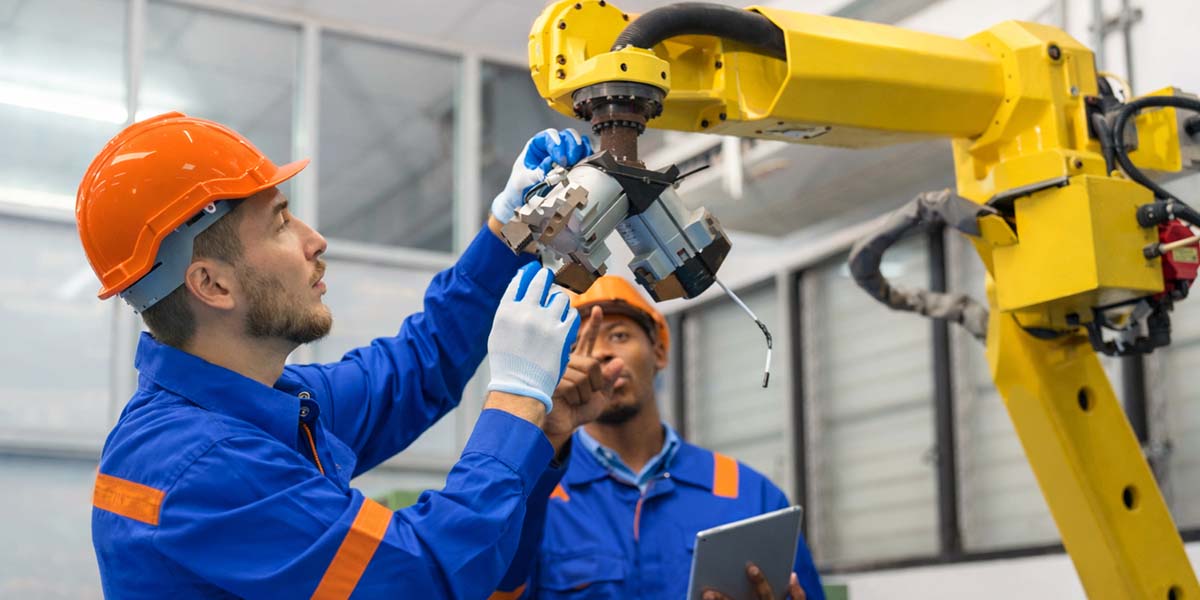
When a machine fails on the factory floor, everything changes in an instant. Production slows down, teams scramble to diagnose the issue and restoring operations quickly becomes the top priority. For maintenance supervisors and plant managers, these moments often lead to the decision whether to attempt a quick in-house repair or bring in outside specialists.
Handling repairs internally may seem faster or less expensive at first. However, industrial equipment is often complex and the wrong repair decision can lead to extended downtime, safety risks or additional damage.
Understanding the differences between DIY and professional industrial equipment repair can help manufacturing teams make smarter decisions when equipment problems occur. Explore the risks, benefits and key factors that help determine which approach makes the most sense for your facility.
The True Cost of Equipment Downtime
When industrial equipment stops working, the financial impact goes far beyond the cost of a replacement part. Unplanned downtime costs the world’s largest manufacturers more than $1.4 trillion annually, and the downtime costs have increased significantly over the past several years.
Lost Production and Delayed Schedules
Manufacturing operations depend on a consistent production flow. When a critical piece of equipment fails, entire production lines may stop or slow down. This can delay shipments, disrupt supply chains and put pressure on production targets. Even short disruptions can create scheduling challenges that take days or weeks to fully recover from.
Idle Labor and Operational Inefficiencies
Downtime also affects the workforce. Operators, technicians and supervisors may be forced to wait while equipment is repaired or replaced. These interruptions can reduce productivity and create inefficiencies throughout the facility. In larger facilities, a single machine failure can disrupt multiple teams working across the production process.
Increased Risk of Additional Equipment Damage
Improper repairs or rushed troubleshooting attempts can sometimes make the situation worse. A temporary fix may allow equipment to restart briefly, but underlying issues can remain unresolved. Over time, this can lead to repeated failures or more extensive equipment damage that requires major repairs.
DIY Equipment Repair: When Does It Make Sense?
Many facilities rely on experienced maintenance teams who understand the equipment used in their operations. In certain situations, DIY equipment repair can be efficient. However, it is important to understand when in-house repairs are appropriate and when they may introduce unnecessary risks.
Situations Where DIY Repair May Make Sense
Some equipment issues are straightforward and can be handled safely by internal maintenance teams.
In the following cases, performing repairs internally may help resolve small issues quickly without interrupting operations for long periods:
- Routine maintenance tasks: Activities like replacing filters, lubricating moving parts or tightening loose electrical connections are typically part of normal preventive maintenance.
- Basic component replacement: Simple components like fuses, belts or accessible sensors can often be replaced quickly without specialized tools.
- Initial troubleshooting checks: Maintenance technicians may be able to inspect wiring connections, verify power supply issues or identify visible component failures before escalating the problem.
Risks and Limitations of DIY Repairs
While simple repairs can be handled internally, more complex equipment problems often require specialized expertise and tools.
The following risks are among the reasons many facilities limit DIY repairs to routine maintenance and basic troubleshooting:
- Safety hazards: Industrial equipment can involve high-voltage electrical systems, hydraulic pressure or heavy mechanical components. Without specialized training, repair attempts can create serious safety risks for maintenance staff.
- Limited diagnostic capabilities: Many modern industrial systems require advanced diagnostic tools to identify faults accurately. Without the proper testing equipment, technicians may only be able to identify surface-level problems.
- Potential warranty issues: Some equipment manufacturers restrict repairs to authorized service providers. Attempting repairs internally may void existing equipment warranties.
- Extended downtime: If an internal repair attempt fails, valuable time may be lost before professional assistance is requested.
Benefits of Professional Industrial Equipment Repair
Professional repair providers specialize in diagnosing and restoring industrial equipment used in manufacturing environments. For many facilities, outsourcing complex repairs helps reduce downtime while protecting valuable equipment.
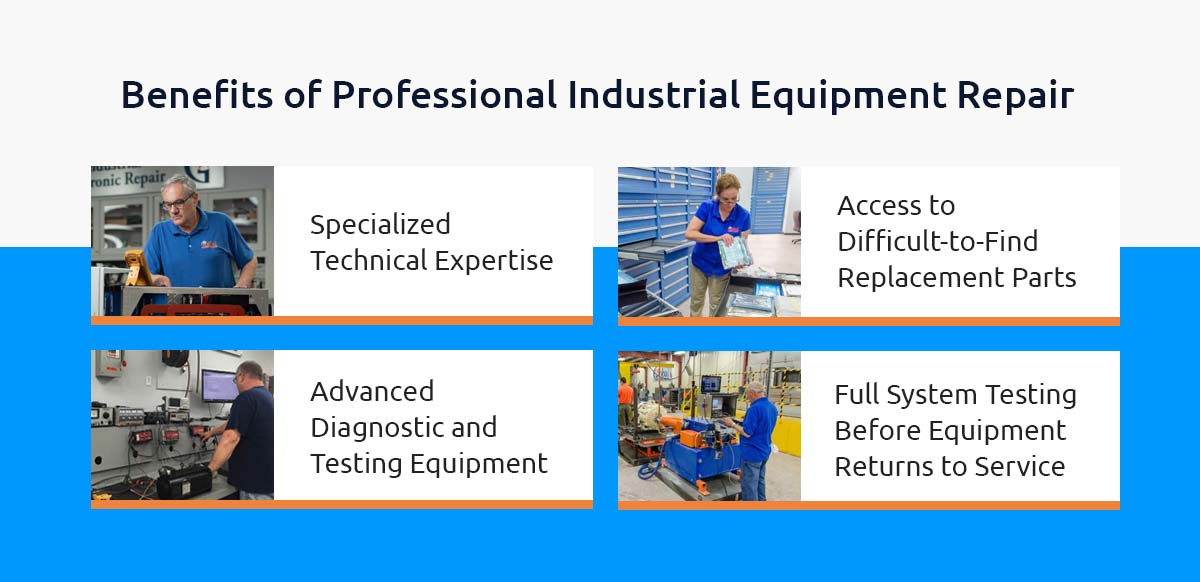
Specialized Technical Expertise
Industrial repair technicians work with equipment like servo motors, control boards, drives and automation systems every day. This focused experience allows them to quickly identify issues that may not be obvious during general troubleshooting. Specialists also understand how different components interact within complex systems, which helps prevent incomplete repairs.
Advanced Diagnostic and Testing Equipment
Professional repair facilities typically have access to specialized diagnostic tools and testing systems. These tools allow technicians to fully evaluate equipment performance before returning it to service. For example, complex components like spindle drives may require calibration and parameter adjustments that go beyond basic repair work.
Access to Difficult-to-Find Replacement Parts
Manufacturing facilities often rely on equipment that has been in service for many years. When parts become obsolete or difficult to source, professional repair providers may have supplier networks that help locate compatible components. This can extend the useful life of equipment that would otherwise be difficult to replace.
Full System Testing Before Equipment Returns to Service
Professional repair providers often perform comprehensive functional testing to ensure repaired equipment operates correctly under real-world conditions. This testing helps confirm that the root cause of the failure has been resolved and reduces the likelihood of repeat issues.
Key Factors to Consider Before Choosing a Repair Route
Every equipment failure is different. Before deciding between DIY and professional repair, manufacturing teams should consider several important factors.
Safety and Compliance Requirements
Industrial repair work often involves electrical systems, high-pressure hydraulics or heavy machine. These systems require strict safety procedures to protect workers and prevent accidents.
Facilities must assess whether internal maintenance teams have the training and certifications required to perform complex repairs while complying with safety regulations.
Complexity of the Equipment
Some industrial systems are relatively simple, while others rely on sophisticated automation and electronic controls.
Examples of complex equipment include the following:
- CNC machines: These machines depend on precise control systems and calibration to maintain accuracy.
- Industrial robotics systems: Robotic systems combine mechanical components, sensors and advanced programming that require specialized expertise.
- Servo motor systems: These systems rely on accurate feedback loops and controller settings that must be adjusted carefully during repairs.
- Automation control boards: Modern manufacturing equipment often depends on electronic control boards that require detailed diagnostic procedures.
Industrial equipment represents a major investment for manufacturing facilities. Many manufacturers offer warranties to protect these investments. Before attempting internal repairs, facilities should carefully review warranty requirements. Unauthorized repairs may invalidate warranty coverage and increase long-term costs.
Get Started With Global Electronic Services
Industrial equipment failures can create serious operational challenges, especially when production schedules depend on reliable equipment. Global Electronic Services provides industrial electronics, servo motor, hydraulic and automation equipment repair services with risk-free evaluations and fast turnaround times. Request a quote today for all your repair needs.
