

Beware Cooling Tower Fan Motor Failures During Seasonal Startup
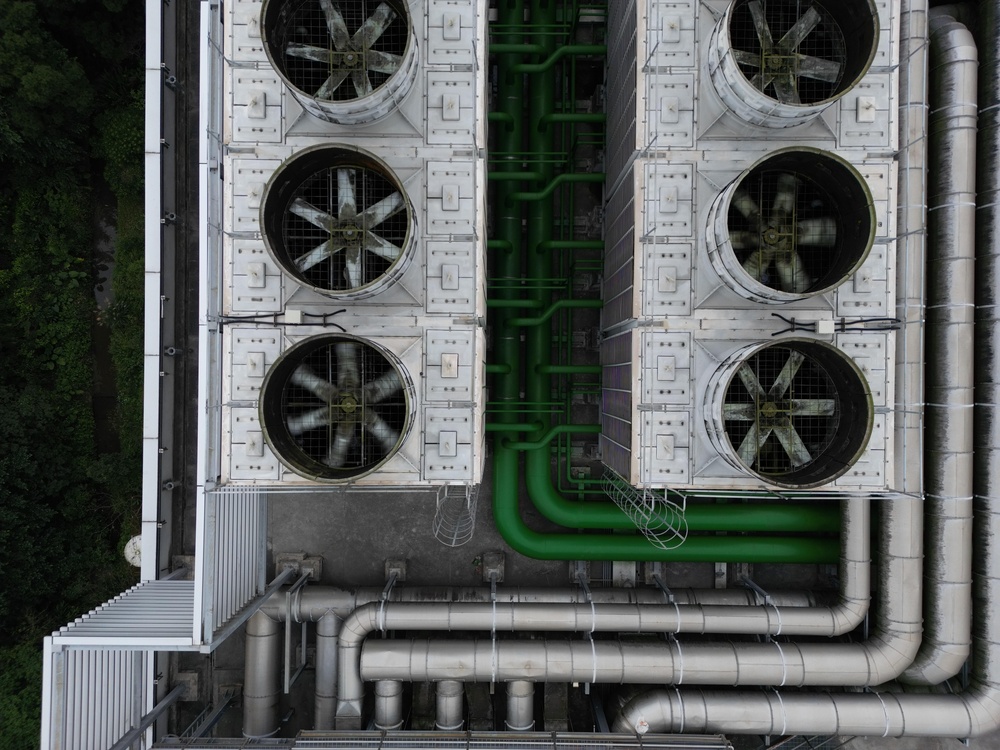
Cooling season arrives, the tower comes back online, and a fan motor that ran without a problem last October fails within the first week — sometimes on the first day. It’s a pattern maintenance teams see every spring, and it’s not bad luck. Seasonal startup is the most stressful moment in a cooling tower fan motor’s operating year, and months of winter layup are largely why.
What the offseason does to a motor
A fan motor sitting idle through winter isn’t resting; it’s degrading. Moisture is the primary offender. Condensation cycles — warm afternoons followed by cold nights — drive repeated humidity intrusion into motor housings, even in units with reasonable sealing. Over a full winter, that moisture attacks winding insulation and accelerates corrosion on terminal connections and internal electrical contacts.
Bearing grease also migrates away from contact surfaces during extended inactivity and can congeal at low temperatures, leaving bearings effectively dry at first startup. Debris accumulation adds to the problem. Leaves, nesting material, and sediment work into housings and fan assemblies, adding mechanical load before the first rotation completes.
None of this is visible from the outside. The motor looks the same as it did last fall.
Why startup is the stress test
The first energization after a long layup is when everything hits at once. Inrush current on startup runs 6–8 times the motor’s full-load amperage. Windings weakened by moisture exposure may not handle that surge cleanly. Bearings that haven’t warmed and redistributed their grease create added drag at that same moment. On belt-driven towers, belts stiffened or cracked from cold storage pile on further resistance.
The first few minutes of operation are the hardest a cooling tower fan motor works all season. If a failure is coming, that’s typically when it happens.
Warning signs to catch before (and just after) startup
Watch for the following symptoms during inspection and the first run cycle. Any one of them warrants stopping and investigating before continuing operation:
- Grinding or rumbling on startup, indicating dry bearings making metal-to-metal contact
- A motor that hums but won’t rotate, pointing to seized bearings or a failed run capacitor
- Tripped breakers or blown fuses, sign of winding damage struggling under inrush current
- Visible corrosion on the motor housing, terminal blocks, or conduit entry points
- A burning smell in the first minutes of operation (insulation breaking down)
- Abnormal vibration or wobble from the fan assembly, suggesting debris accumulation
Pre-startup checks that narrow the odds
A few targeted steps before throwing the switch can separate a motor that’s ready to run from one that isn’t:
- Run a megohmmeter test on winding insulation to detect moisture damage
- Rotate the fan shaft by hand to check for bearing drag or obstruction
- Inspect and regrease bearings per manufacturer specifications
- Check the belt condition for cracking, glazing, and proper tension before the drive takes load
- Inspect terminal connections and conduit seals for corrosion or moisture intrusion
Startup is the season’s first real load test
Most cooling tower fan motors don’t fail in the middle of a heat wave but in the first days of the season, carrying damage that accumulated quietly over winter. The warning signs are there before startup if anyone looks for them. While a motor that passes a preseason inspection isn’t guaranteed to run all summer, one that fails the inspection was never going to make it anyway.
