

Before You Order a New Cylinder, Read the Old One

When a hydraulic cylinder fails, the instinct is to order a replacement. That’s sometimes the right call. But a cylinder pulled and discarded without inspection leaves behind the evidence of what caused the failure. A new cylinder going into the same conditions fails on the same schedule.
The failed cylinder is a diagnostic document. The question is whether anyone reads it before it goes in the scrap bin.
What the rod surface tells you
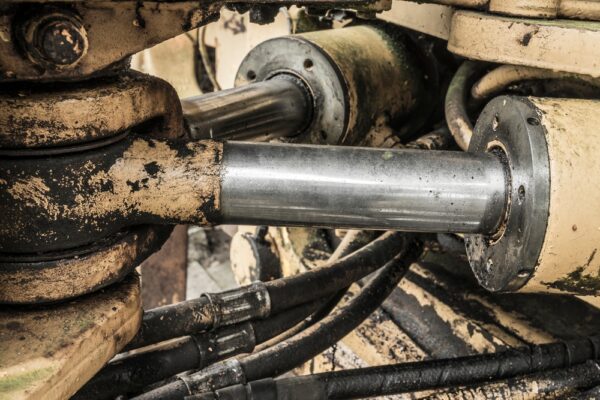
The rod is the most readable failure indicator on a pulled cylinder. Three patterns each point to a different root cause:
- Scoring along the length: Linear scratches parallel to the rod axis indicate contamination bypassing a failed wiper seal. The particles entered the rod seal area and abraded the rod surface on each stroke. A scored rod destroys new gland seals. Fitting a seal kit without addressing the rod surface condition is a short-term repair at best.
- Pitting and corrosion: These are caused by extended idle periods with the rod retracted and exposed to moisture or by water contamination in the fluid. The environment or fluid condition is the problem, not the cylinder.
- Bending or bowing: This is visible when the rod is rolled on a flat surface. It points to side-loading, where the cylinder is absorbing lateral force it wasn’t designed for. A new cylinder in the same mount fails the same way.
What the bore tells you
Bore inspection requires a light source and a straight line of sight down the tube. What shows up matters:
- Scoring on the bore wall: Parallel lines running the bore length indicate contamination between the piston and bore, usually from the same wiper seal failure that scored the rod or from contaminated fluid bypassing filtration. A scored bore shreds new piston seals. It needs to be honed or sleeved before a seal replacement accomplishes anything.
- Localized wear near full extension: The piston is spending most of its time under load at or near the end of stroke, concentrating wear at that position. It points to an undersized cylinder for the application.
What the seals tell you
Pulled seals carry diagnostic information if they’re examined before being discarded:
- Hardened, cracked, or extruded seals: These indicate heat damage. The cylinder ran hot from sustained high-pressure bypass or overheated fluid. A new seal kit in an overheating system fails from heat, not wear.
- Shredded or torn seals: These suggest mechanical damage from a scored bore or rod surface. The abrasive condition destroyed the seal rather than the seal wearing naturally.
- Swollen seals: These are an indication of fluid incompatibility. The seal material wasn’t suited to the hydraulic fluid in use, causing the elastomer to swell and lose sealing geometry. Replacing with the same material specification repeats the failure.
What internal leakage tells you
A cylinder that drifts under load without external leakage has bypassing piston seals. Confirm it by extending the cylinder under tension, capping the port, and observing whether the rod retracts. The pattern of drift matters:
- Drift that developed gradually points to seal wear, which is expected at the end of the service life.
- Drift that appeared suddenly suggests bore damage or piston failure.
- Rapid drift under light load indicates bore damage.
- Slow drift under heavy load denotes partial seal bypass.
What the failure is really saying
A cylinder that failed after 18 months tells a different story than one that lasted 18 days. The rod surface, bore condition, and pulled seals together distinguish between a cylinder that ran its course and one that was taken down by a condition still present in the system. Ordering a replacement without reading that evidence is the fastest way to have the same conversation again in a few months.
