

Augmented Reality vs. Virtual Reality in Manufacturing
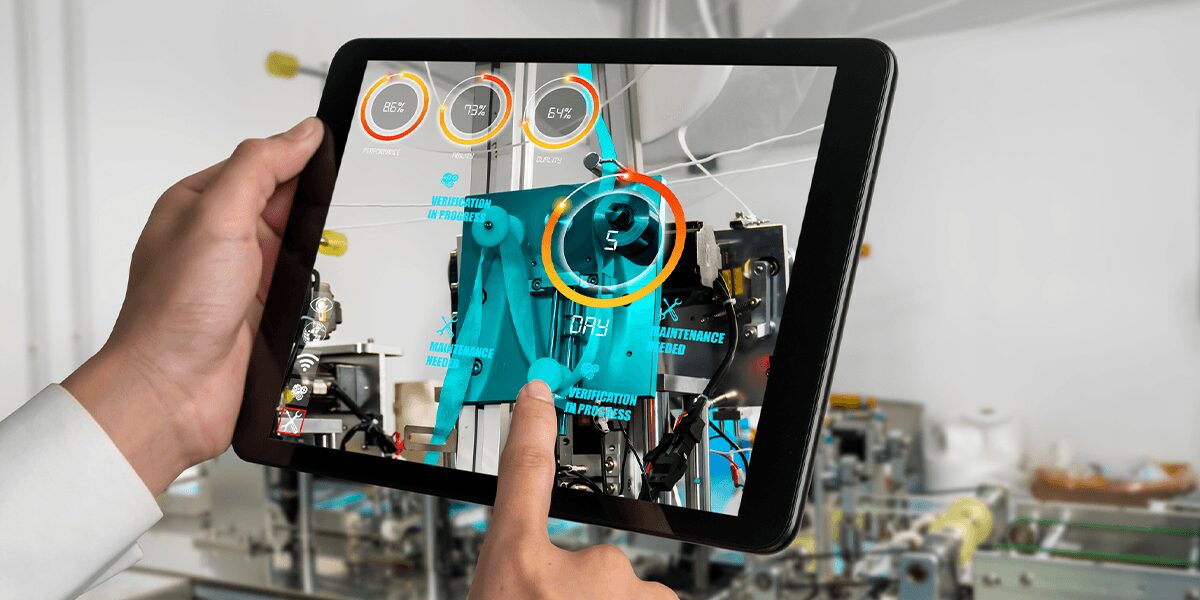
Augmented reality (AR) and virtual reality (VR) are game-changing technological advancements in manufacturing. While they seem similar, they offer different capabilities and serve distinct applications.
AR technology projects images and text onto real-world surroundings, while VR completely transforms a user’s visual field. Understanding how these technologies differ is the first step to implementing them in your company’s training, design, maintenance and repair processes.
What Is Augmented Reality?
AR technology projects computer-generated data, images and instructions onto a user’s real-world surroundings. It does this through advanced cameras, software and sensors that capture live views and overlay graphics. This technology enhances or adds to a user’s surrounding environment, which creates a mixed reality.
AR correctly scales and positions digital content so that it appears anchored to real-world locations or objects. Users can then interact with virtual elements. They are still able to see the factory floor, machinery and colleagues around them, but they can also view and manipulate overlaid graphics. AR works on devices such as smartphones, tablets, smart glasses and headsets. It is often more accessible than VR technology because it does not always require specialized headsets.
What Is Virtual Reality?
VR technology creates a fully immersive, computer-generated simulation. It replaces the user’s reality with a digital one, tricking the brain into feeling completely present in the virtual environment. VR works with devices such as headsets and uses consoles, controllers and tracking sensors to alter a user’s visual and auditory reality. VR headsets block external light and sound to facilitate an immersive experience.

The Core Differences of Augmented Reality vs. Virtual Reality
Before implementing virtual reality and augmented reality in manufacturing operations, it is important to understand how these advanced technologies differ. Consider how AR and VR technology vary in the following categories:
Environment
The most obvious difference between AR and VR technology is the environment users inhabit. AR integrates with the physical world, working within boundaries such as factory floors. VR creates an entirely artificial environment, creating a digital rendering of an environment like a factory layout.
Immersion
AR technology delivers partial immersion where users are aware of both worlds. This is crucial for safety when working near moving machinery.
VR fully immerses users, making them feel as if they have been “transported” to another reality. This level of immersion is excellent for focus, but it requires a controlled environment to ensure users do not physically trip or collide with real-world objects.
Application Goal
A plant manager’s most critical distinction between AR and VR technology is application.
AR technology offers real-time, contextual information to users performing tasks. It is intended as a productivity tool that individuals can use in the moment.
The main purpose of VR technology is to provide a simulated experience in a controlled, safe environment. It is an excellent planning and preparation tool to use before physical work begins.
Augmented Reality in Manufacturing
Employees and technicians can use AR directly on the facility floor. It is an excellent tool in the following manufacturing applications:
Real-Time Maintenance and Repair
AR streamlines maintenance and repair processes to help technicians deliver fast, high-quality results. This technology can overlay schematics, step-by-step instructions or data such as pressure and temperature, directly onto the equipment a technician services. If an employee wears AR smart glasses in front of a malfunctioning motor, they can see the details they need without flipping through a greasy manual.
If a part requires a repair or replacement, an AR system can guide users through the process and highlight the specific components to remove. Off-site professionals can view what a technician sees and offer guidance, making remote assistance easier. Some AR systems allow off-site individuals to draw in their field of view, using arrows or circles to guide on-site technicians through complex repairs. This capability can significantly reduce equipment downtime.
Complex Assembly and Quality Control
Modern manufacturing often involves intricate assembly processes where a single missed step can compromise product integrity. AR systems project instructions onto a workspace, guiding employees through multistep assembly processes to reduce errors.
AR technology can instantly verify each step of an assembly process digitally and highlight deviations from master designs. For example, a projector overhead might illuminate the precise bin to pick a part from and then highlight the exact location on the assembly where the employee needs to install it. This reduces the user’s mental load and the amount of required rework.
Virtual Reality in Manufacturing
VR is an excellent preparation tool in manufacturing facilities and applications. Here are the best ways to implement virtual reality in the manufacturing industry:
Immersive Employee Training
VR allows employees to practice new tasks and skills in risk-free virtual environments. Since VR replaces reality, it is the best option in situations where mistakes can be dangerous or expensive. VR training eliminates the risk of injury and equipment damage, helping employees safely navigate situations such as the following:
- Emergency shutdown procedures
- Handling hazardous materials
- Operating complex machinery before installation
If a trainee makes a mistake in a VR simulation, they can simply reset the system. They can experience the consequences of an error without enduring the physical repercussions. This “fail-safe” environment builds competency rapidly, helping employees learn faster, gain confidence and increase their ability to identify risks.
Virtual Prototyping and Factory Planning
Engineers can use VR technology to build and test prototypes of products or entire factory layouts. This makes it easier and faster to:
- Identify design flaws.
- Optimize workflows.
- Make changes digitally.
- Save significant time and money.
VR technology revolutionizes design processes. It helps engineers create virtual replicas of individual products or entire production lines. Before cutting a single piece of metal, a team can assess a product’s size, appearance and functionality.
Designers can also use VR to test workflow efficiency, walking through a virtual factory layout and identifying spatial conflicts. For example, VR design software can help a designer determine if a machine is too close to a walkway or if conveyor belts obstruct forklift paths. Identifying these challenges in a virtual model enables organizations to optimize facility designs before installation occurs, preventing costly changes in the future.
Contact Global Electronic Services for Industrial Equipment Repair
While AR and VR technology enhance processes, your company’s core industrial equipment remains the heart of the operation. No matter how advanced your organization’s operations become, the reliability of your machinery is paramount for operational continuity.
Global Electronic Services offers expert maintenance and repair, restoring your company’s critical equipment. Call us at 877-721-3756 to request a quote and learn more about our services.

