

7 Reasons a Brand-New Motor Can Fail Faster Than the Old One

When a replacement motor fails faster than the one it replaced, the instinct is to blame the motor. That explanation is almost never right. A new motor going into an application that destroyed the last one encounters the same conditions from day one, without the years of wear-in that let the original motor compensate. The failure isn’t bad luck; it’s the same problem with a fresh victim. Some common culprits include the following:
1. Uncorrected misalignment
The old motor ran misaligned long enough that wear patterns developed around it. The new motor goes in on the same mounting surface without an alignment check, and shaft loads that were distributed across worn components are now concentrated on fresh bearings and a tight coupling.
2. Soft foot that wasn’t addressed
If the mounting surface is uneven, tightening the hold-down bolts introduces frame distortion that shaft alignment work can’t correct. Alignment done without checking soft foot first doesn’t hold, and soft foot is present far more often than installation crews check for it.
3. An unidentified contamination source
The failed motor showed heat damage or insulation breakdown that looked enough like age-related failure that no one investigated further. The contamination source, whether coolant intrusion, airborne abrasive, or chemical mist, stayed open. The new motor starts accumulating the same damage immediately.
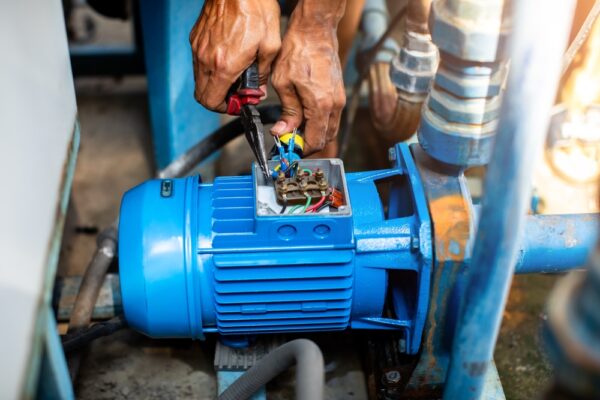
4. A drive that wasn’t matched to the new motor
Non-inverter-rated motors on VFD applications are the most common version of this. The PWM switching stress that degrades winding insulation at the end-turns begins at first power-up. Drive parameters that weren’t updated to reflect the new motor’s nameplate full-load amp (FLA) rating and pole count add another layer of incompatibility.
5. Overload protection that was never recalibrated
Overload relays are set for a specific motor’s FLA rating. When the replacement comes from a different manufacturer or efficiency class, its FLA may differ enough that the existing protection is no longer accurate. A relay set too high lets the motor run into thermal damage before it trips. One set too low gets bypassed under production pressure, which is its own path to failure.
6. The original failure mode was never investigated
Voltage imbalance, chronic overloading, and power quality problems don’t go away when the motor gets swapped. If the failed motor was pulled and replaced without a failure mode investigation, whatever caused the original failure is still present. The new motor starts its service life in an environment that already destroyed one motor, with no corrective action between them.
7. The spare motor wasn’t ready to install
A motor that’s been sitting on a shelf for a year or more without proper storage maintenance isn’t necessarily in new condition. Bearings brinell under static load. Windings absorb moisture. A megger test and manual rotation check before installation take minutes and catch the problems that show up as early bearing failure after the motor goes in.
A new motor is only as reliable as the application it goes into. Installation without investigation hands a fresh motor the same conditions that destroyed the last one, and the outcome follows the same logic.
