

6 Root Causes for Slowing Cycle Times on Pneumatic Pick-and-Place Systems
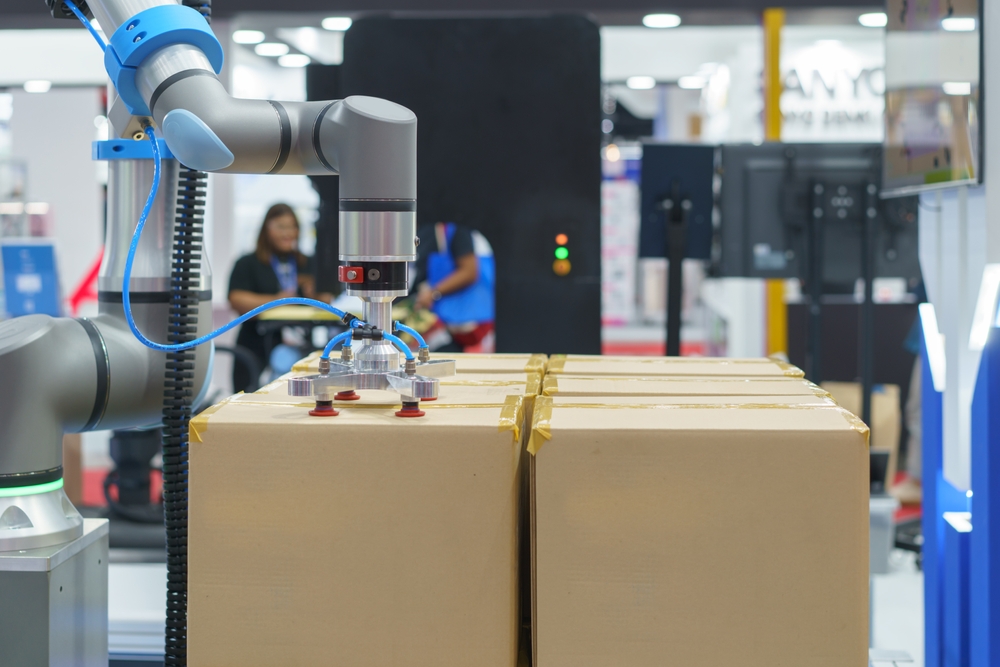
A pick-and-place system running 2 seconds slower per cycle doesn’t sound like much. Across a full shift, that’s real throughput loss, and it compounds. The frustrating part is that pneumatic slowdowns rarely trip a fault. The system keeps running, so the problem stays off the radar until someone actually times it.
When cycle times start creeping, the cause is almost always traceable. It’s usually one of these six:
1. Pressure drop in the supply line
Supply pressure running below OEM spec — even by 10 psi — reduces cylinder force and extends stroke time. The most common culprits are a clogged FRL filter element, undersized supply lines that can’t deliver adequate volume during rapid actuation, and a compressor that sags at the outlet during peak cycling. Check pressure at the FRL outlet and upstream of the directional control valve before digging deeper.
2. Directional control valve wear
Spool seals harden and lose elasticity over time, allowing air to bypass internally rather than driving the cylinder. That internal bypass reduces effective pressure at the actuator and slows both extension and retraction. Solenoid coils that are beginning to fail add lag at the start of each stroke. In high-cycle applications, valve degradation is gradual enough that operators rarely notice until cycle times are measured against a baseline.
3. Cylinder seal wear and internal leakage
Worn piston seals allow air to migrate between chambers, reducing the pressure differential that drives the stroke. Heat from continuous high-speed cycling accelerates seal degradation, and scored or contaminated cylinder bores add friction even when supply pressure is adequate. Short-stroking — where the cylinder fails to fully extend or retract — is a common symptom when seal wear has progressed far enough to affect stroke completion.

4. Flow control valve restriction
Flow control valves set too restrictively limit airflow on each stroke. Valves that have drifted from their original setting are a frequent and easy-to-miss cause of gradual slowdown. Debris accumulation inside the orifice produces the same effect. Opening the valve incrementally and re-timing the cycle is a fast first check before pulling any components.
5. Contaminated or wet air supply
Moisture degrades seals, corrodes valve internals, and causes erratic cylinder movement as water collects in lines. Particulate contamination scores bores and valve spools, accelerating wear at every point downstream. Drain intervals on filter regulators are often longer than the actual contamination load warrants, particularly in humid environments or facilities with older compressor infrastructure.
6. Tubing length and line volume between valve and actuator
Long tubing runs between the directional control valve and the cylinder create a larger air volume that must be filled on every stroke before useful work begins. Oversized tubing compounds the effect and slows pressure buildup at the actuator. Relocating the valve closer to the actuator or right-sizing tubing to match actual flow requirements can recover measurable cycle time without replacing a worn component.
Cycle time loss on a pneumatic pick-and-place system is a diagnostic problem before it’s a parts problem. Start upstream at the compressor and FRL, confirm pressure and air quality, then work downstream through the valve, tubing, and cylinder. Each of these causes has a measurable signature. Find the one that matches, address it at the source, and re-time the system against a documented baseline.
